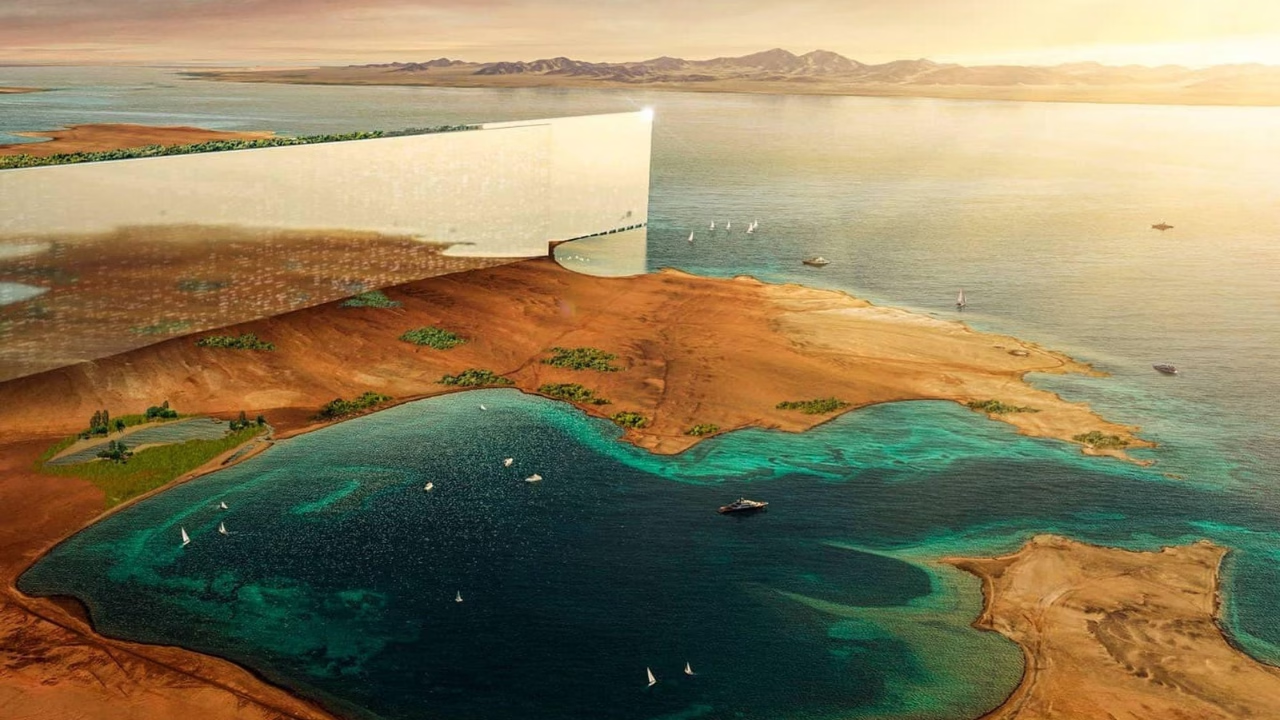
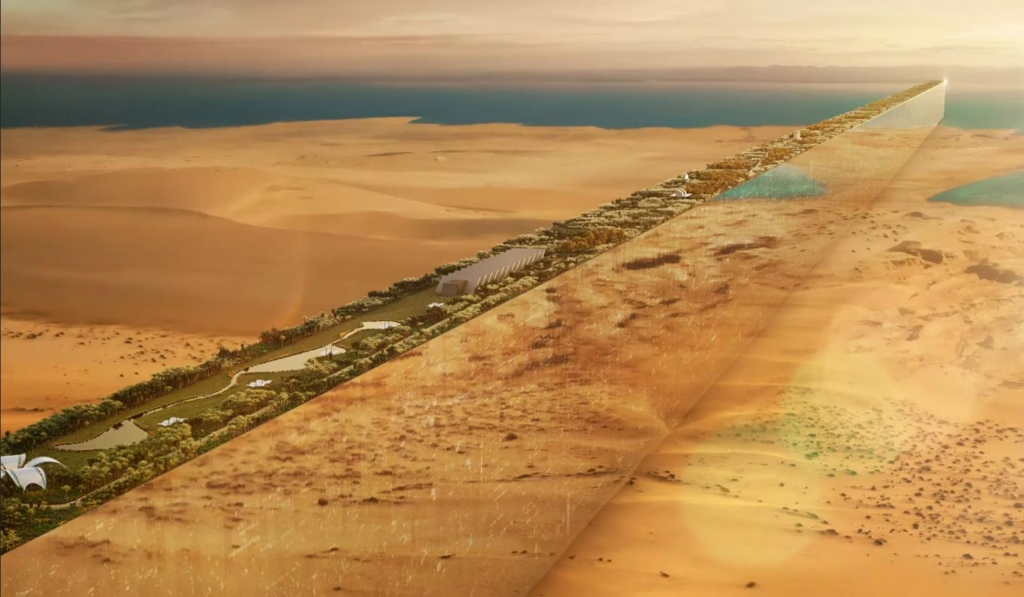
NEOM The Line has become one of the most discussed urban development concepts in the world. Originally promoted as a 170-kilometre linear city between mirrored walls in northwest Saudi Arabia, it was designed to challenge almost every conventional assumption about how cities are planned, built and operated. Reuters described The Line as a futuristic city extending 170 kilometres into the desert and part of the wider NEOM development at the centre of Saudi Arabia’s Vision 2030 diversification plan.
The idea was bold: a dense urban corridor with no conventional roads, high-speed internal mobility, renewable energy ambitions and tightly integrated digital infrastructure. On paper, it was not simply a real estate project. It was a full city system, combining housing, transport, utilities, public services, energy, water, waste management, logistics and environmental control inside a single planned urban form.
Table of contents
Why The Line Is So Difficult to Deliver
The challenge with The Line Saudi Arabia is not one individual technology. Many of the required elements already exist in some form: high-rise structures, metro systems, district cooling, desalination, wastewater treatment, renewable power, digital control systems and prefabricated construction.
The real difficulty is the interface between them.
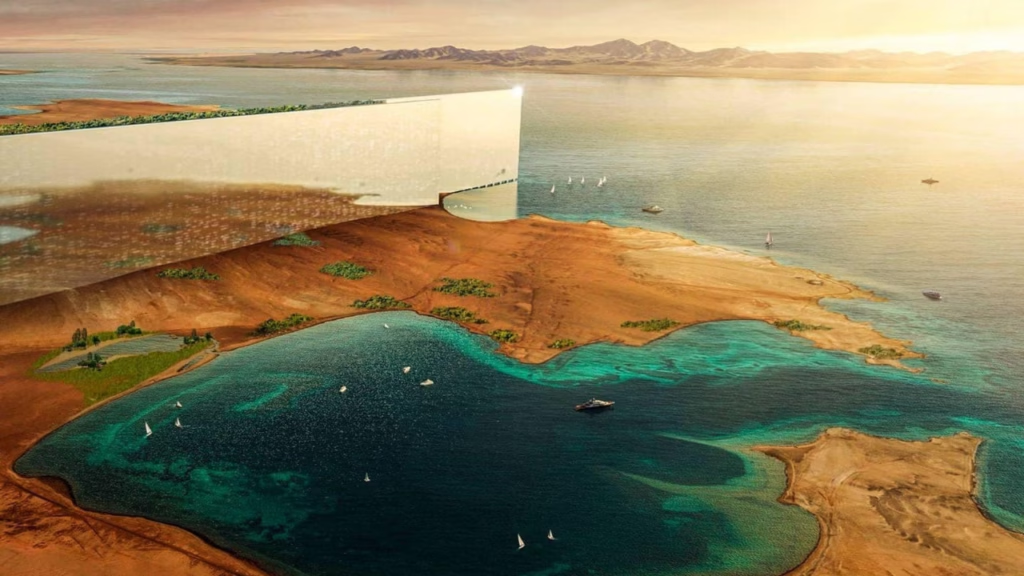
Hidden Marina: Neom announces first phase of The Line | blooloop
A 170-kilometre linear city is a city-scale operating system in which structural engineering, foundations, façade systems, mobility, fire safety, evacuation routes, maintenance access, utilities, data networks and population phasing all need to work together. If one layer changes, several others are affected.
That is where megaproject risk becomes visible. A concept can be technically possible in parts, but still difficult to finance, phase and operate as one programme.
A Shift Toward Phased, Demand-Led Delivery
NEOM’s current public positioning is more careful than the early marketing. The official NEOM website now describes The Line as a multi-phased development advancing through a phased, demand-led approach.
That wording matters. It signals a move away from judging the project only by the original full-scale vision and toward a more staged delivery model. For a project of this scale, that is definitely a necessary shift. A first phase must be useful and operable on its own. It cannot depend entirely on the completion of the full 170-kilometre concept to make sense.
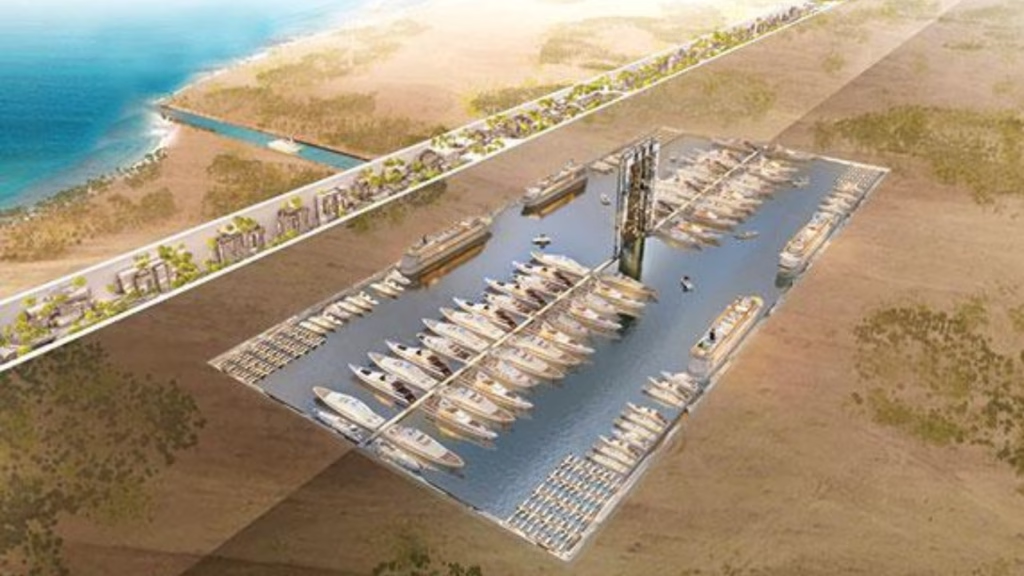
This is one of the most important lessons from NEOM The Line: large urban projects need modular delivery. Each phase should have a clear function, a realistic population base, defined infrastructure demand and manageable operating costs.
Reprioritisation Across the Wider NEOM Programme
The wider NEOM programme has also shown signs of reprioritisation. Reuters reported that some Saudi gigaprojects, including NEOM, have faced implementation challenges, delays and scaling back as the kingdom reassesses priorities and cost pressures. Reuters also reported that PIF recorded an $8 billion write-down on some high-profile gigaprojects, reflecting cost overruns, delays and changing market conditions.
A clearer example came from Trojena, another major NEOM component. In March 2026, Webuild announced that NEOM had exercised a termination for convenience on the contract for three dams and the architectural structure known as The Bow. Webuild stated that the works were about 30% complete, with the termination also applied to other contractors for other works in the area. This contract termination shows that major NEOM work packages are being actively reviewed, stopped or rescoped where required.
Why NEOM Green Hydrogen Looks Different
Not every part of NEOM faces the same delivery problem. The NEOM Green Hydrogen project has a clearer industrial logic. NEOM Green Hydrogen Company reported that the project reached 80% construction completion across all sites at the start of Q1 2025. Air Products describes the complex as a plant designed to produce up to 600 tonnes per day of carbon-free hydrogen in the form of green ammonia.
That matters because a hydrogen facility has defined inputs, outputs, equipment packages and off-take structures. A linear city depends on a far wider set of assumptions: population growth, real estate demand, transport behaviour, operating economics and long-term public service delivery.
The Real Lesson from NEOM The Line
The restructuring of NEOM The Line should not be read simply as failure or cancellation. A more accurate reading is strategic recalibration.
The project shows what happens when architectural ambition meets the practical realities of engineering, finance, procurement, construction sequencing and long-term operations. Ambitious infrastructure can still be valuable. But ambition needs phasing, cost discipline and independent usefulness at every stage.
For engineers, planners and investors, The Line is now a case study in megaproject risk. The question is no longer whether the full original vision was visually impressive. The question is whether Saudi Arabia can convert selected parts of that vision into infrastructure that is buildable, financeable, maintainable and useful.