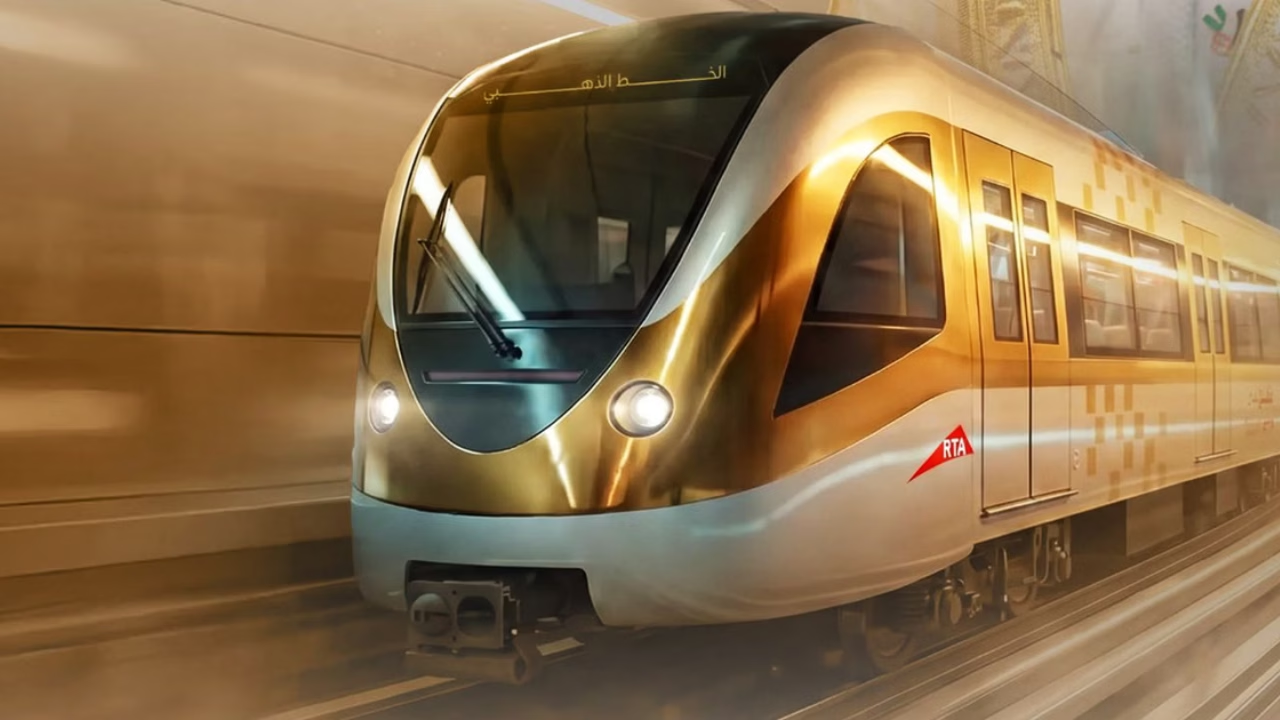
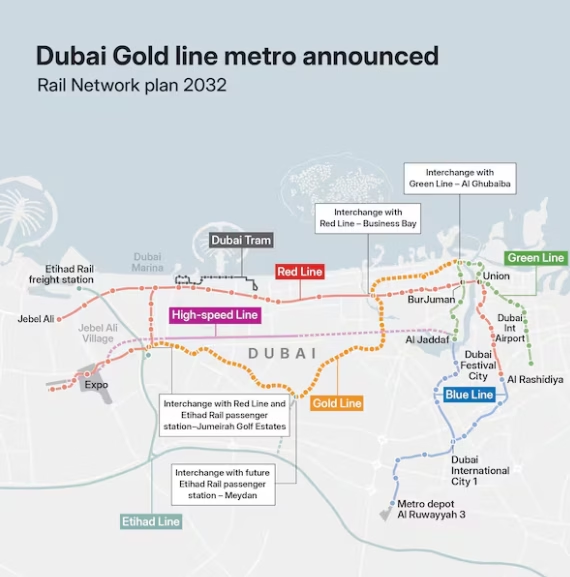
Dubai has approved the Gold Line Metro, a 42-kilometre fully underground rail corridor planned to serve 18 stations across the emirate. The project carries an estimated investment of AED 34 billion and is scheduled for inauguration on 9 September 2032. According to the Government of Dubai Media Office, the Gold Line will connect with the existing Red and Green Lines and integrate with Etihad Rail, extending Dubai’s rail network into a wider multimodal transport system.
The route is planned to link Dubai’s historic centre with several fast-growing residential, commercial and mixed-use districts. It will start from Al Ghubaiba and pass through areas including Mina Rashid, City Walk, Business Bay, Mohammed Bin Rashid City, Nad Al Sheba, Meydan, Al Barsha South, Jumeirah Village Circle and Jumeirah Golf Estates. This makes the Gold Line more than a commuter route. It is a planning tool for how Dubai expects people to move between older districts, business zones and new development areas over the next decade.
Table of contents
Why the Gold Line Matters for Dubai’s Transport Network
Dubai’s metro network has already shaped the city’s growth pattern. The Red Line, Green Line, Route 2020 and the Blue Line have shown how rail infrastructure can support higher-density development around stations. The Dubai Gold Line Metro takes this idea further by placing a major corridor entirely underground.
Underground metro construction is more expensive and technically demanding than elevated construction, but it is often the right solution in dense urban areas. It avoids taking large surface corridors, reduces visual impact, limits conflicts with existing roads and allows stations to be placed closer to high-demand districts. In Dubai’s case, this is especially important because many of the areas on the proposed route are already developed or planned for major expansion.
Engineering Challenges of a Fully Underground Metro
The technical challenge of the Gold Line lies largely below street level. Dubai’s subsurface conditions include variable sands, weak cemented layers, groundwater influence and dense utility corridors. For a fully underground metro, this means the project will need careful geotechnical investigation, tunnel boring machine planning, settlement control, dewatering strategy and waterproofing design.
Stations will be among the most complex parts of the project. A metro station consists of concourses, emergency exits, escalators, lifts, ventilation shafts, smoke extraction systems, power rooms, signalling rooms, fire-rated zones and passenger circulation areas. In underground rail projects, stations often create more programme risk than the running tunnels because they interact directly with roads, buildings, utilities and public spaces.
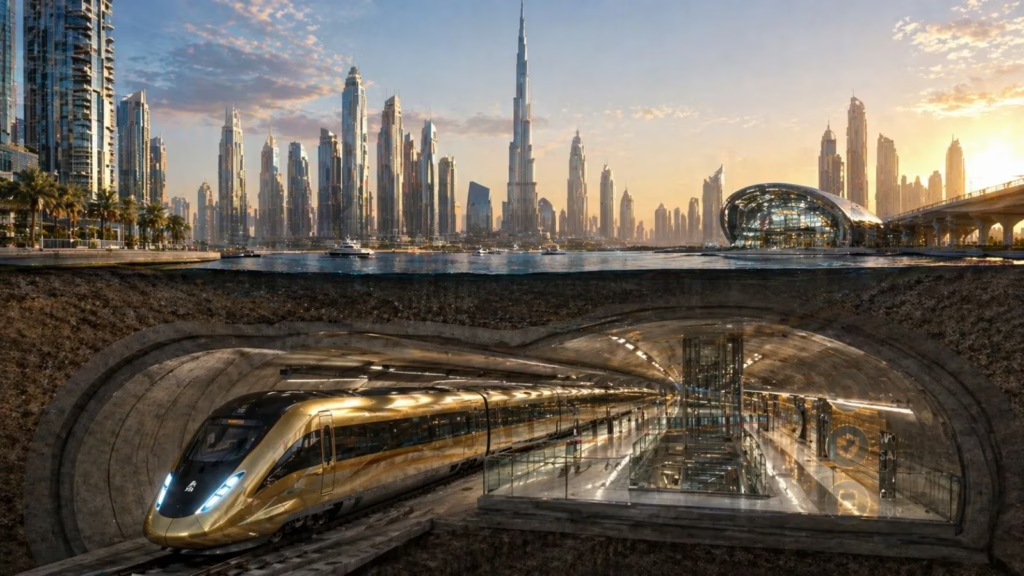
Dubai Gold Line Metro: Dh34 Billion Expansion to Connect 15 Key Areas by 2032
The official announcement states that the Gold Line will use advanced tunnel boring machine technology to reduce disruption to residents and existing urban developments. This will be important because the route crosses active districts where construction access, traffic management and utility diversions will need close control.
Interchange Design Will Decide Daily Performance
The Gold Line will connect to the Red Line at Business Bay and Jumeirah Golf Estates, to the Green Line at Al Ghubaiba, and to Etihad Rail at Meydan and Jumeirah Golf Estates.
A metro network works well only when passengers can change lines quickly and clearly. Long walking distances, narrow platforms, poor signage or limited escalator capacity can reduce the benefit of a new line. For Dubai, interchange design must also account for visitor traffic, peak-hour commuting, event demand and future growth around station areas. Crowd modelling, fire-life safety design and vertical transport capacity will be central to the final station layouts.
Supporting Development and Reducing Road Pressure
Dubai expects the Gold Line to serve more than 55 development projects and benefit over 1.5 million people by 2040. Daily ridership is projected to reach 465,000 passengers beyond 2040. The line is also expected to reduce more than 40 million road journeys annually, while easing congestion on the Red Line between Burjuman and ONPASSIVE stations by 23%.
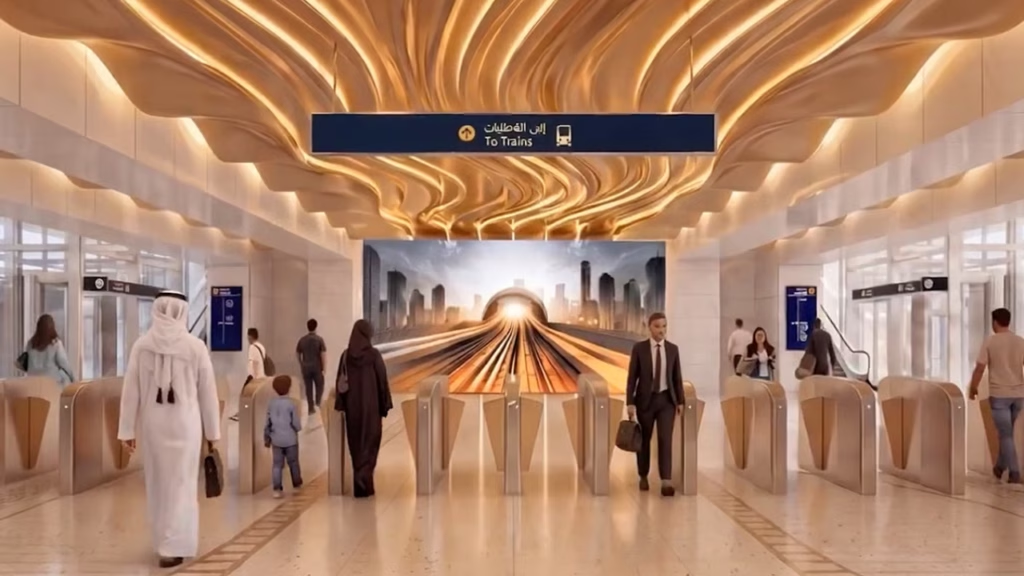
Dubai Metro Gold Line: How the Dh34 Billion Underground Route Will Transform Daily Life, Cut Car …
These figures show the wider purpose of the project. The Gold Line is intended to reduce dependence on private vehicles, support higher land values near stations and give major communities a stronger public transport option. For developers, rail access improves the attractiveness of residential and commercial projects. For the city, it offers a way to grow without allowing road congestion to rise at the same pace.
Delivery Timeline and Key Risks
The Gold Line is scheduled for tender issuance in 2026, contract award in 2027 and opening in 2032. Delivering a 42-kilometre fully underground metro within this period will require tight control over early design, procurement, land access, utility mapping, tunnelling logistics, station sequencing and systems integration.
The later stages will be just as important as excavation. Track, power supply, signalling, communications, platform systems, ventilation, safety systems, testing and trial operations must all work together before passenger service can begin.
Once complete, the Gold Line will expand Dubai Metro from 120 kilometres, including the Blue Line, to 162 kilometres. The number of stations will increase from 67 to 85 stations.
The project will be judged by more than its length or cost. Its real value will depend on whether it changes daily travel habits, improves interchange between rail lines, reduces pressure on roads and supports Dubai’s next stage of urban growth.