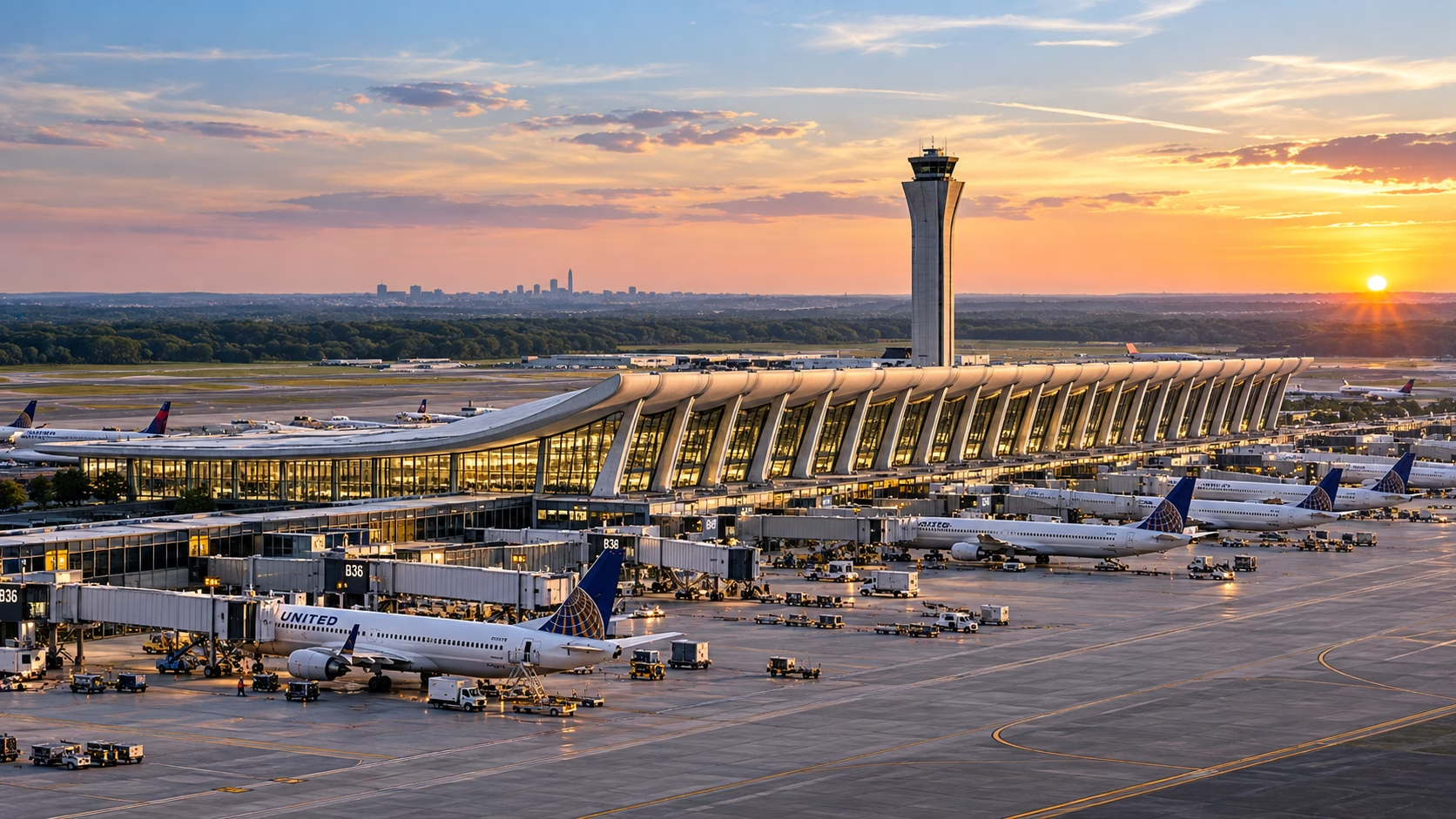
Washington Dulles International Airport’s proposed transformation has moved from announcement to an approved $19.9 billion capital programme. Package A — covering the main terminal transformation and Concourse A/B works — is now valued at approximately $6.2 billion, with construction expected to begin in late 2027. The wider programme includes underground passenger-transport infrastructure and three major concourse packages, with major elements targeted for completion around 2034.
The programme reached its defining moment on 19 August 2026, when the Metropolitan Washington Airports Authority (MWAA) board approved a $19.9 billion capital programme — $15.5 billion of new funding plus $4.4 billion already authorised. That approved figure is smaller than the $22.5 billion concept announced at the White House on 29 July, which included additional elements not carried into the approved programme. The gap between the two is itself part of the story: a megaproject moving from an announced vision to a costed, board-approved delivery plan.
ConstructConnect identified Dulles as one of three US megaprojects valued at $1 billion or more going out to bid in August — a period of unusually heavy activity in American infrastructure procurement.
Table of contents
WHY AIRPORT PROGRAMMES ARE DIFFERENT ?
The defining constraint on an airport modernisation is that the airport does not close.
Every phase has to be delivered while aircraft movements, passenger processing, baggage handling and security screening continue at close to normal capacity. That single requirement drives the entire programme structure.
It means work is packaged into phases that can be completed within operational windows. It means temporary facilities have to be built and then demolished, at real cost, purely to maintain throughput during construction. It means night working, restricted access and heavy coordination with airlines, federal agencies and the airport operator. It also means the critical path frequently runs through things that are not construction at all — the relocation of a security checkpoint, the commissioning of a baggage system, the transfer of an airline to a temporary gate.
THE FIVE-PACKAGE PROGRAMME
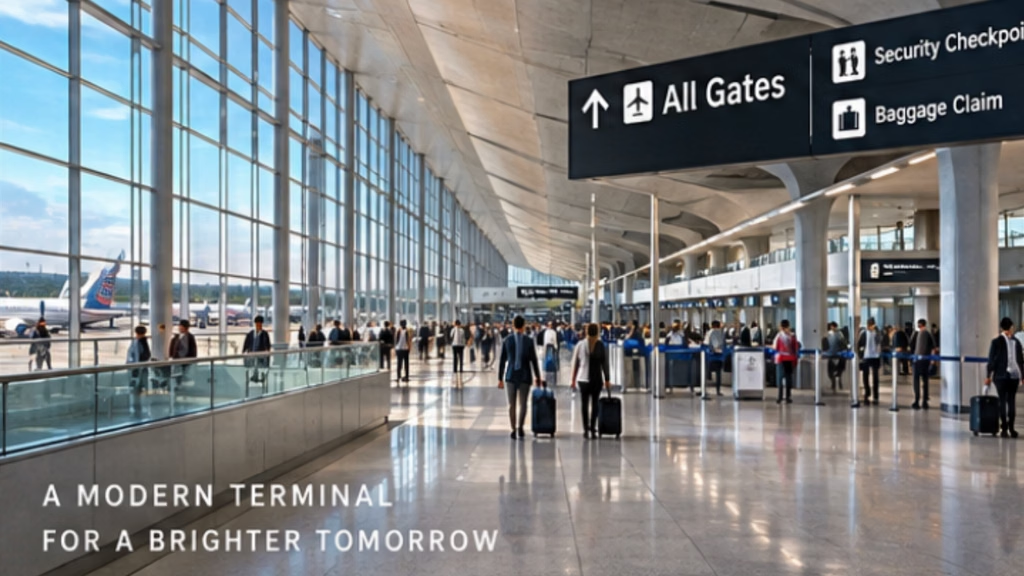
The approved programme is delivered through five packages. As reported after the August approval, the breakdown is approximately:
Package A (~$6.2bn) — main terminal transformation plus Concourse A/B; the largest single package.
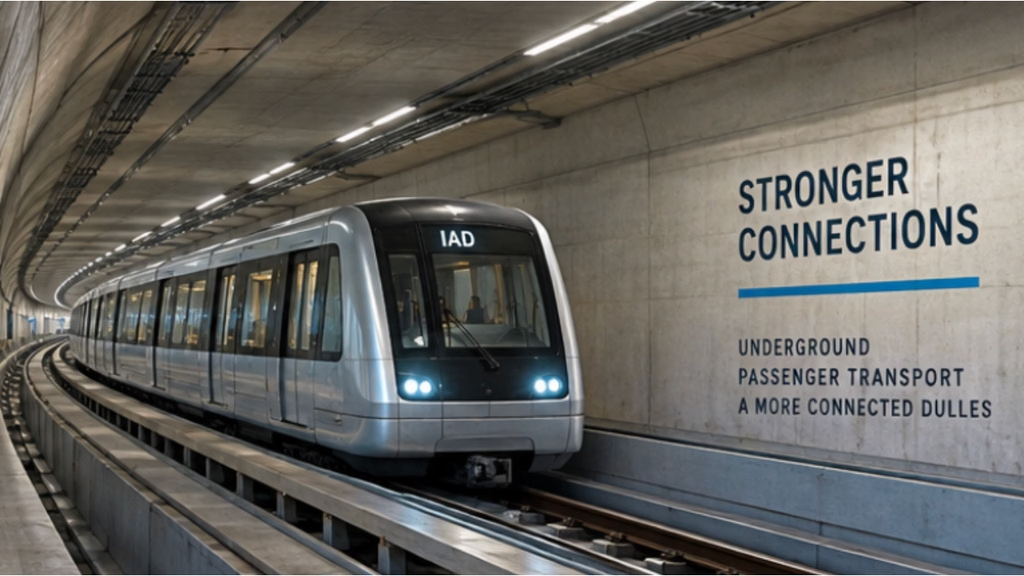
Package T (~$3.75bn) — the AeroTrain underground passenger-transport connection.
Package C (~$4bn) — Concourse E/F.
Package D (~$3.7bn) — new Concourse G/H.
Package B (~$2.26bn) — regional concourse replacement.
Splitting a programme of this scale into packages serves several purposes. It allows more contractors to bid, supporting competition on price; it allows earlier packages to begin while later ones are still being designed; and it limits the exposure created by placing an entire programme with a single delivery entity.
The cost is interface risk. Every boundary between packages — and here there are five, including the underground AeroTrain connection threading beneath the terminal and concourse works — is a place where responsibility can become ambiguous, where design assumptions may not match, and where delay in one contract propagates into another. Managing those interfaces is the central task of the programme management team.
HOW PACKAGE A IS PROCURED
Package A is the first major test of whether the enlarged programme can translate from master planning into construction.
Qualifications for Package A were due on 19 August, with the procurement moving toward shortlist, RFP and contract award. It is a Request for Qualifications rather than a final construction bid, so the award comes later in the process. Construction of Package A is expected to begin in late 2027.
The scope of that single package illustrates the live-airport problem. The RFQI requires planning, design, construction, commissioning, operational readiness, tenant relocations and closeout — the full sequence of turning a working terminal into a rebuilt one without interrupting the passengers moving through it.
THE 2034 QUESTION
The programme’s major terminal transformation and automated passenger-transport works are targeted for completion around 2034, while some elements of the wider approved programme extend beyond that date.
A target date on a programme of this scale creates a particular dynamic. Design has to be sufficiently advanced at award to avoid the change cycles that consume schedule. Long-lead procurement — baggage systems, passenger boarding bridges, mechanical plant — has to be ordered well before it is needed. And packages have to be sequenced so a delay in one does not stop the next from starting. Where those conditions are not met, programmes with fixed targets tend to compress the fit-out and commissioning phases, because those come last — and that is also where compression is most damaging, since commissioning determines whether the facility actually works on opening day.
WHAT TO WATCH
First, how Package A moves from qualifications to shortlist, RFP and contract award. The procurement is the first major test of whether the enlarged programme can translate from master planning into construction.
Second, how MWAA manages the interfaces between the five packages. The boundaries between terminal works, concourses and the underground passenger-transport system will be critical.
Third, whether scope and cost remain aligned as design advances. The approved programme is already different from the broader $22.5 billion concept announced in July, and how it holds from here is the real measure of its discipline.
THE ENGINEERING READ
For practitioners, the transferable lesson from Dulles concerns temporary works. On a live airport, the temporary facilities required to maintain operations during construction are not overhead. They are a substantial part of the design effort, the cost and the programme, and they are frequently underestimated at business-case stage because they produce nothing permanent. Any programme that has to keep operating while it rebuilds itself pays that cost, and recognising it early is the difference between a realistic budget and an optimistic one.
There is a market dimension too, though it should be read as a risk rather than a diagnosis. The potential effects of heavy simultaneous procurement are familiar: thinner competition can increase bid prices, while concentrated demand can place pressure on specialist labour, subcontractors and long-lead equipment. For an owner managing a multi-package programme, the timing of procurement therefore becomes a strategic decision rather than simply an administrative one.
Credits : Metropolitan Washington Airports Authority, ConstructConnect, US Department of Transportation, ENR
Key Takeaways
- Washington Dulles International Airport’s $19.9 billion capital programme includes a main terminal transformation and major concourse works, with construction set to start in late 2027.
- The programme consists of five packages, enabling competitive bidding and phased delivery while maintaining airport operations.
- Procurement of Package A is a key test for the programme, focusing on seamless transition from planning to construction without disrupting airport activities.
- By 2034, the major terminal changes aim for completion, necessitating careful design and procurement to avoid delays during fit-out phases.
- The programme highlights the importance of temporary facilities to maintain operations during construction, which can significantly affect budgeting and timelines.