Marine infrastructure is facing a wider design brief than before. Ports, seawalls, breakwaters, offshore wind assets and cable protection systems still need strength, durability and resistance to aggressive marine exposure. At the same time, owners and regulators are placing more attention on climate resilience, biodiversity and long-term environmental performance.
That is the context behind ECOncrete’s USD 14 million funding round. The company confirmed that the fundraise will support global expansion across three priority sectors: coastal protection, sustainable ports and offshore infrastructure. The round was led by Builders Vision, with backing from Barclays Climate Ventures, Monaco’s ReOcean Fund and other institutional investors.
Table of contents
What ECOncrete Technology Does
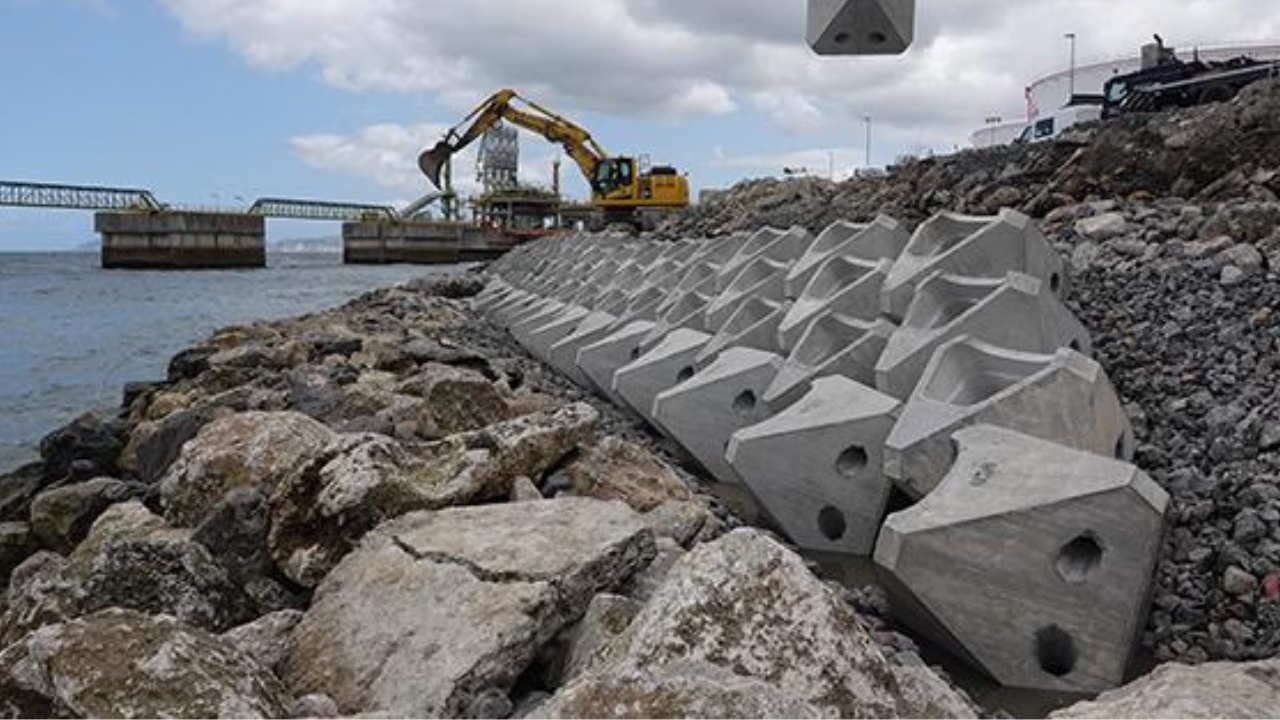
ECOncrete develops concrete-based systems for marine and coastal infrastructure. Its approach focuses on improving the surface chemistry, texture and geometry of concrete units so that they can support marine life while still performing as engineered structures.
Conventional marine concrete is usually assessed through compressive strength, abrasion resistance, chloride resistance, reinforcement protection, hydraulic stability and service life. These requirements remain essential. A quay wall, revetment or seawall must first survive its operating environment.
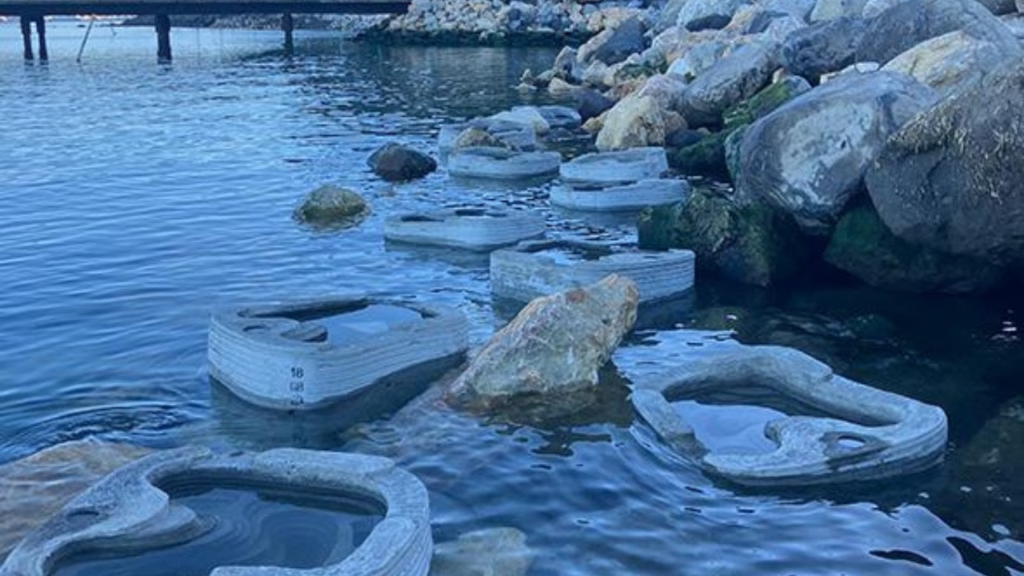
The ecological weakness of many traditional marine structures is their surface condition. Smooth, flat and chemically harsh concrete can reduce habitat complexity along the land-water edge. Natural rocky shorelines have cracks, pools, ledges and irregular surfaces that allow organisms to attach, shelter and reproduce. Standard concrete infrastructure often removes those features.
ECOncrete’s systems address this gap through bio-enhancing concrete compositions, complex surface textures and science-based unit designs. The EU-supported Living Ports project describes these three elements as the basis of the technology, with the aim of reducing the ecological footprint of concrete coastal and marine infrastructure while maintaining strength and durability.
Why Ports Are Interested
Ports are under pressure to expand, modernise and adapt to climate risk. UNCTAD notes that ports and shipping are increasingly exposed to extreme sea levels, coastal flooding, storms, heatwaves and changing wave conditions. It also recommends investment in port infrastructure that improves sustainability, resilience and operational performance.
This creates a practical opening for nature-inclusive marine design. Port authorities often need to renew quay walls, revetments, breakwaters and pile protection while responding to stricter environmental expectations. Bio-enhancing concrete can help turn selected hard surfaces into habitat zones, supporting biodiversity without removing the asset’s primary structural function.
It will not remove the need for environmental impact assessment, mitigation planning or lifecycle carbon review. However, it gives designers another tool when hard infrastructure is unavoidable.
Coastal Protection and Climate Resilience
Coastal protection is another strong market for bio-enhancing concrete. Sea-level rise, storm surge and land subsidence are increasing risk for many low-lying cities and coastal settlements. The IPCC has highlighted the growing exposure of coastal communities and infrastructure to sea-level rise and extreme sea-level events.
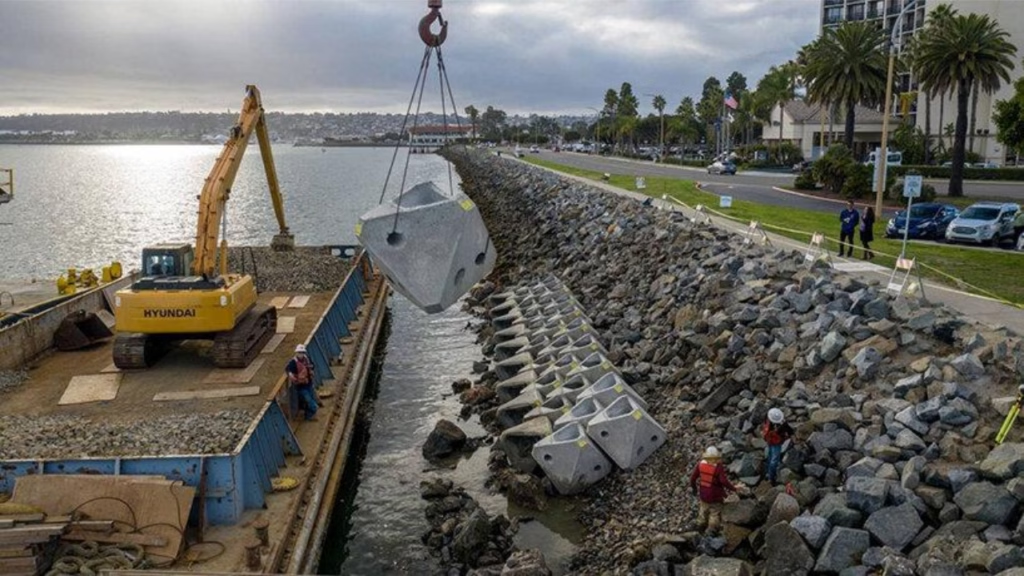
Seawalls, revetments and breakwaters will continue to be used where retreat or soft engineering alone is not feasible. The design question is whether those assets can deliver better environmental outcomes while protecting people, land and infrastructure.
Bio-enhancing systems are relevant because they introduce surface complexity into structures that would otherwise create hard ecological boundaries. In suitable locations, this can support colonisation by oysters, algae, corals, mussels and other local marine organisms. Performance still depends on salinity, temperature, water quality, light, sediment and species availability, so monitoring remains essential.
Offshore Energy Creates Another Use Case
Offshore wind growth is increasing demand for marine civil infrastructure. The International Energy Agency expects offshore wind capacity additions to reach about 140 GW over the forecast period, more than doubling the growth achieved in the previous five-year period.
That expansion requires ports, foundations, cable protection, scour protection and subsea components. Each asset interacts with the marine environment. As projects move into deeper or more sensitive waters, developers will face closer scrutiny around seabed disturbance, habitat impacts and cumulative environmental effects.
Materials that combine structural reliability with measurable ecological uplift may support better permitting and community acceptance, especially where regulators expect biodiversity gain or nature-inclusive design.
The Engineering Questions Still Matter
Bio-enhancing concrete must be judged by evidence, not branding. The system must demonstrate durability, predictable mechanical performance, constructability and compatibility with standard installation methods. Surface complexity should not create unacceptable maintenance problems, trap debris or reduce hydraulic stability.
Lifecycle assessment is also important. A product can improve marine habitat at the surface while still carrying environmental impacts through cement use, transport, installation and replacement. The strongest case comes when ecological performance, durability and lifecycle data point in the same direction.
ECOncrete’s funding indicates that sustainable marine infrastructure is moving closer to wider commercial deployment. For civil and coastal engineers, the message is practical: future marine assets will be judged by structural performance, resilience and ecological contribution together. The companies that can prove all three with field data will have a clear advantage.