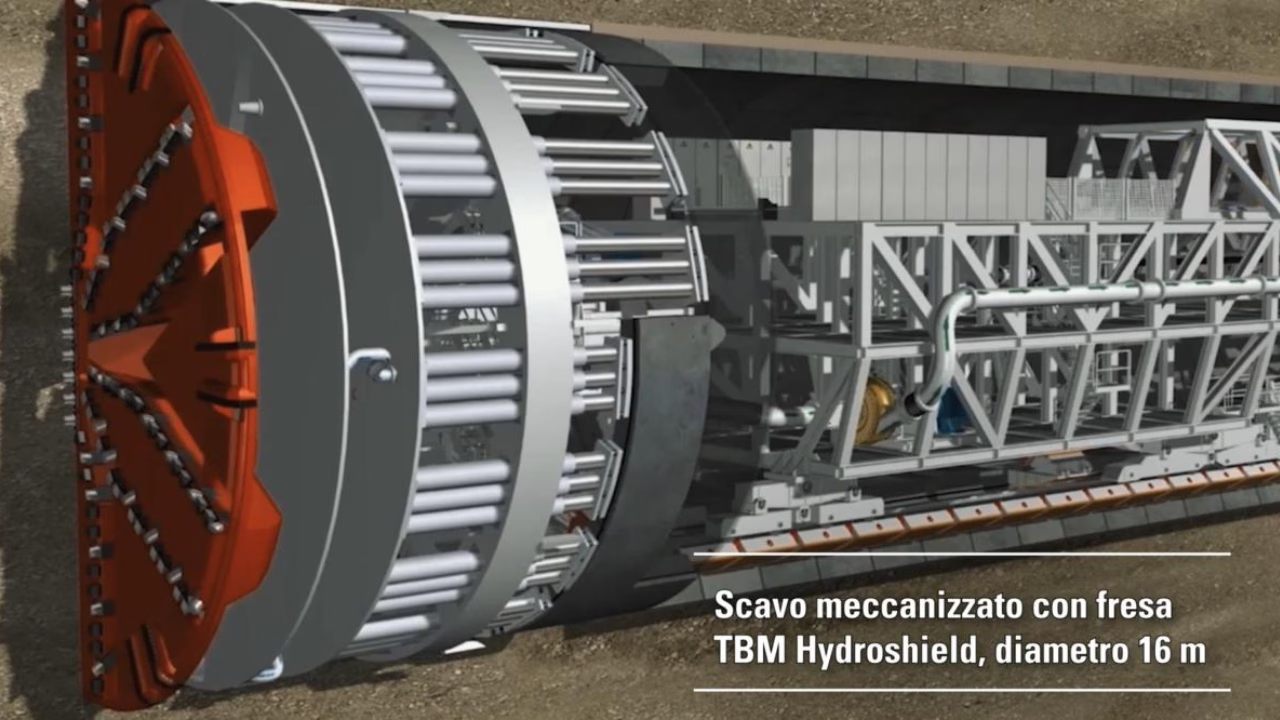
Autostrade per l’Italia has awarded the €803 million central tunnelling package for Genoa’s Subport Tunnel to a Webuild–SELI Overseas consortium. The project will drive twin large-diameter road tunnels beneath the working port, replacing part of the city’s elevated waterfront route and opening the way for a major surface regeneration programme.
The Genoa Subport Tunnel will connect the San Benigno district west of the harbour with the eastern waterfront, running beneath the working port between them. The wider intervention extends to around 4.2 kilometres, of which roughly 3.4 kilometres is the underground stretch. It comprises two separate main tubes reaching a maximum depth of about 45 metres below sea level, excavated to a diameter of approximately 16 metres. The two tubes will carry traffic beneath the port, replacing a major part of the existing elevated waterfront route. Total project cost is around €1 billion, of which the central tunnelling package awarded in August 2026 accounts for €803.18 million.
The design is by Tecne, Autostrade’s engineering subsidiary, within a masterplan by Renzo Piano Building Workshop.
NOT AN IMMERSED TUNNEL
There has been some confusion over how the tunnel is built, so it is worth stating plainly. The Genoa Subport Tunnel is not an immersed-tube tunnel. Current Autostrade documentation describes two main tubes constructed by mechanised excavation, using a large-diameter tunnel boring machine. The machine will excavate through variable ground conditions, including areas affected by groundwater beneath the port.
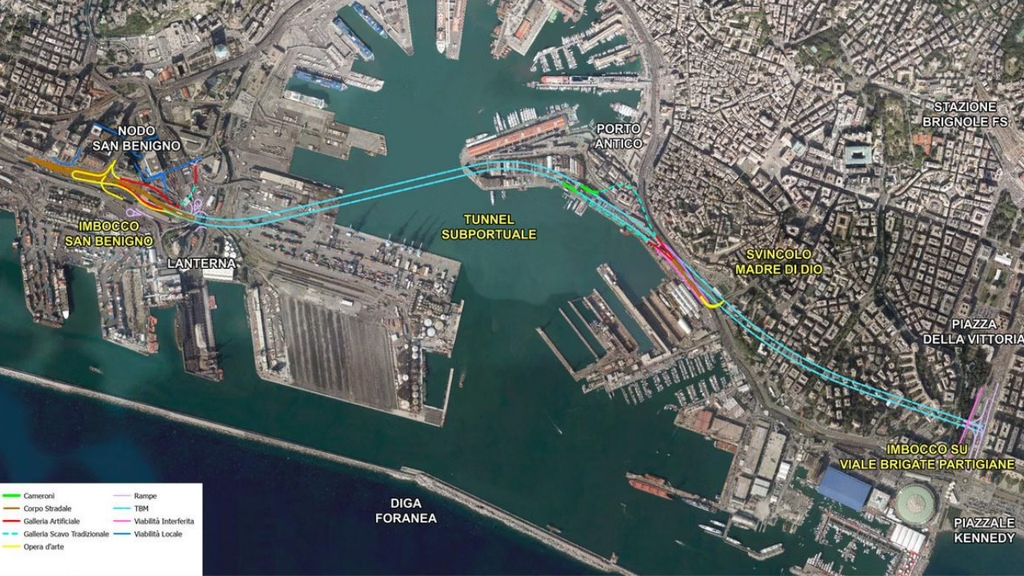
WHAT IT REPLACES
Genoa’s east-west traffic currently depends on the Sopraelevata (the Aldo Moro overpass), an elevated road built in the early 1960s that runs along the waterfront.
That structure no longer meets the city’s needs, and it occupies the interface between the city and its port — precisely the land that has the most value if freed. The tunnel is therefore as much an urban regeneration project as a transport one. Renzo Piano Building Workshop describes the scheme as improving east-west connections while reducing the traffic, noise and atmospheric pollution associated with the overpass. Autostrade’s current figures give 4.7 hectares of green areas and parks and 3.2 hectares of pedestrian areas on the surface the tunnel replaces, alongside the recovery of the historic city walls and the reconnection of the Lanterna, the city’s landmark lighthouse, with the surrounding area.
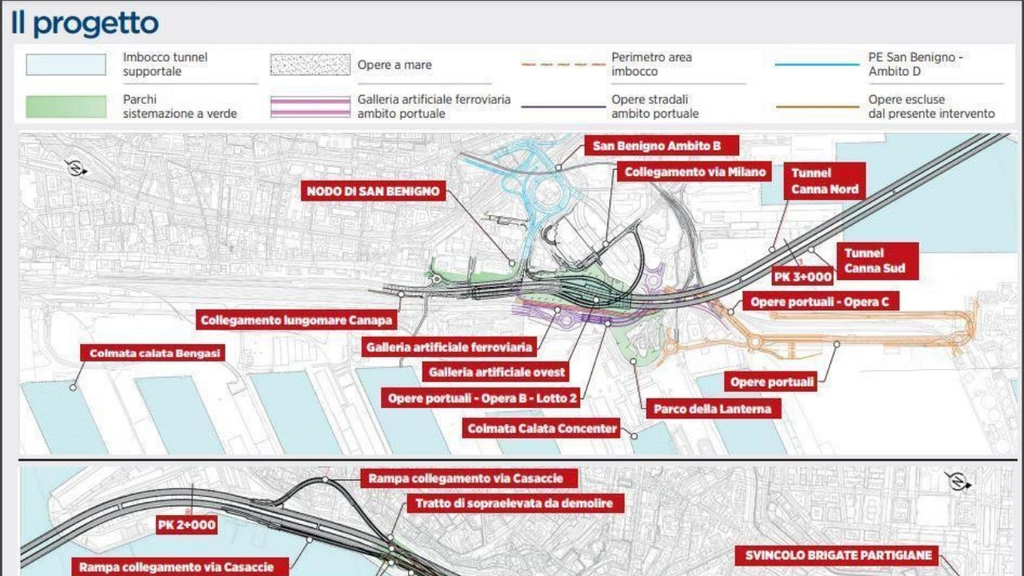
It also separates port traffic from local vehicles, which is the operational argument. Genoa is Italy’s largest cargo and passenger port, and mixing heavy port traffic with city movements on the same surface network constrains both.
THE GROUND
The alignment is geologically varied, which is the central engineering challenge.
It begins in Monte Antola limestone, passes through Ortovero clays and Quaternary marine sediments beneath portions of the harbour, then returns to limestone. Tunnel cover ranges from about 1.5 metres near the western portal to more than 64 metres below the city.
That combination is demanding. A machine that performs well in competent limestone faces entirely different conditions in soft marine sediment, and the transition zones between them are where the risk concentrates. Very shallow cover near the portal adds a settlement constraint at exactly the point where the ground is least able to arch, while the deeper sections beneath the port must manage groundwater under pressure.
PACKAGING
The work has been divided into two principal construction packages.
Lot A, launched in 2024, covers demolitions, rail infrastructure replacement, port-road improvements, flood-control works and the construction needed to establish the main tunnel work sites. Amplia carried out early-stage works.
The central tunnelling package — Lot B — was awarded on 5 August 2026 to a Webuild-led consortium with SELI Overseas, at a final contract value of €803.18 million excluding VAT. It covers the tunnel drive itself: two large-diameter TBM passes through the 3.4-kilometre underground section.
That separation is standard practice on constrained urban sites, and it reflects a practical reality: on a project threading between a live port, a rail corridor and a dense city, the enabling works are a substantial project in their own right. Work sites have to be created before tunnelling can begin, and in Genoa there was no spare land to create them on.
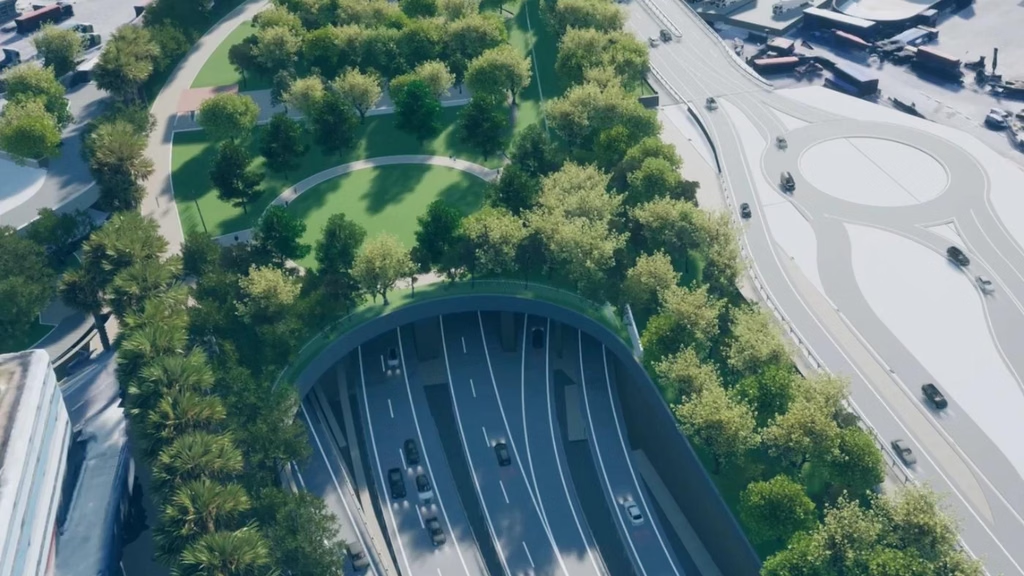
Completion is scheduled for 2029, and the project authority estimates that the completed tunnel could save around one million travel hours annually.
THE ENGINEERING READ
For practitioners, the transferable point is about sequencing on constrained sites.
The enabling package here was let two years before the main tunnelling award. Demolitions, rail replacement and flood control were not preliminaries to be absorbed into the main contract — they were substantial standalone works that had to complete before the principal contractor could begin. On urban projects where no laydown area exists, creating the site is the project’s first real construction challenge. Genoa treated it that way, and packaged it accordingly.
The project is therefore worth watching not only for the tunnelling, but for whether the promised surface regeneration is delivered alongside it.
Key Takeaways
- Autostrade per l’Italia awarded the €803 million central tunnelling package for the Genoa Subport Tunnel to a Webuild–SELI Overseas consortium.
- The tunnel will connect the San Benigno district and the eastern waterfront, replacing part of the elevated waterfront route, and will total approximately 4.2 kilometres, with 3.4 kilometres underground.
- The tunnel design aims to improve urban connections while addressing traffic, noise, and pollution concerns, freeing up valuable land for green and pedestrian areas.
- A mechanised excavation method will construct two separate main tubes beneath variable geological conditions, including groundwater challenges.
- The project is expected to save around one million travel hours annually, with completion scheduled for 2029.
Credits
Autostrade per l’Italia, ENR, Tunnels & Tunnelling, Ports of Genoa Authority, Renzo Piano Building Workshop