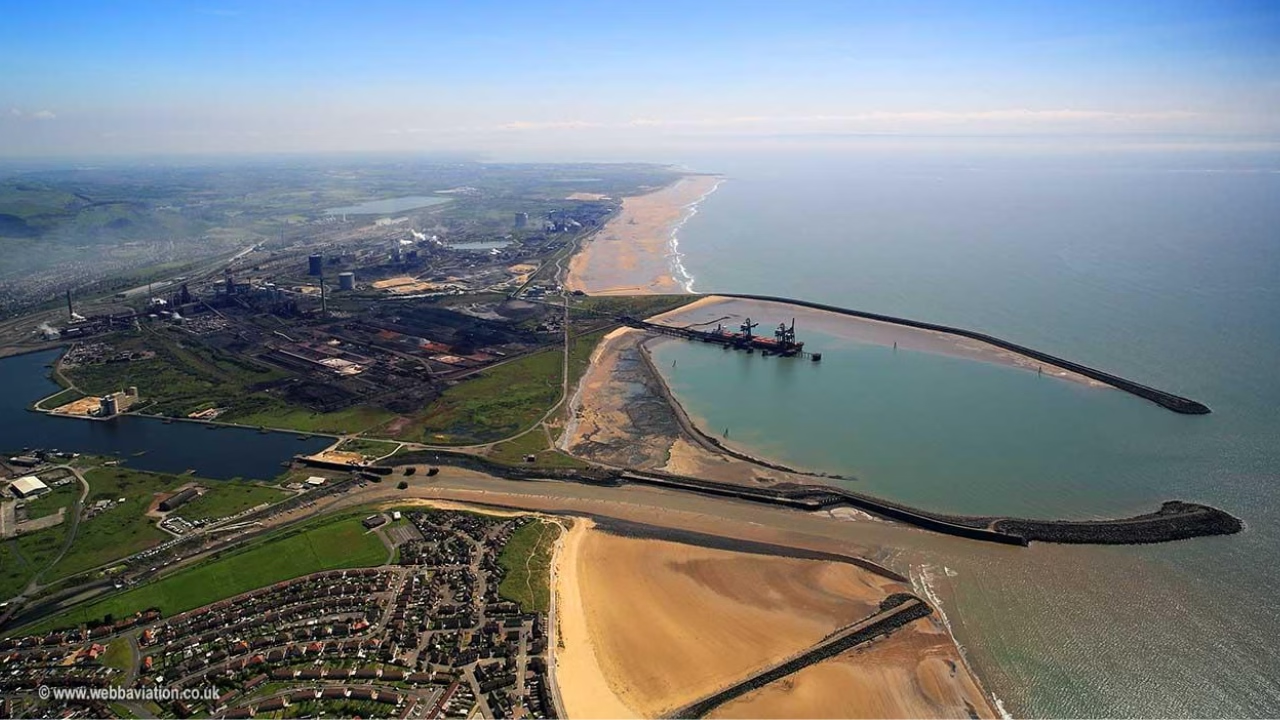
How Port Infrastructure Is Becoming a Critical Path for the Celtic Sea’s Clean Energy Plans
The UK Government has committed up to £64 million to support the development of Port Talbot as a floating offshore wind hub for the Celtic Sea. The funding will support Associated British Ports’ Future Port Talbot programme and is intended to help move the project through design, environmental assessment, consenting and development work. The official UK figure is up to £64 million, although some industry reports have converted this to roughly USD 85 million.
The decision is important because floating offshore wind depends on ports long before turbines reach the sea. The Celtic Sea has strong potential for commercial floating wind, but that potential cannot be converted into generating capacity without suitable quay walls, deep-water access, large assembly areas and heavy industrial logistics. Port Talbot is being positioned as one of the key locations where this supply chain can take shape.
Table of contents
Why Floating Offshore Wind Needs Different Port Infrastructure
Floating offshore wind places unusual demands on port design. Fixed-bottom wind projects already involve large blades, towers and nacelles. Floating wind adds another major component: the floating substructure. These platforms must be manufactured, assembled, integrated with turbines and towed offshore.
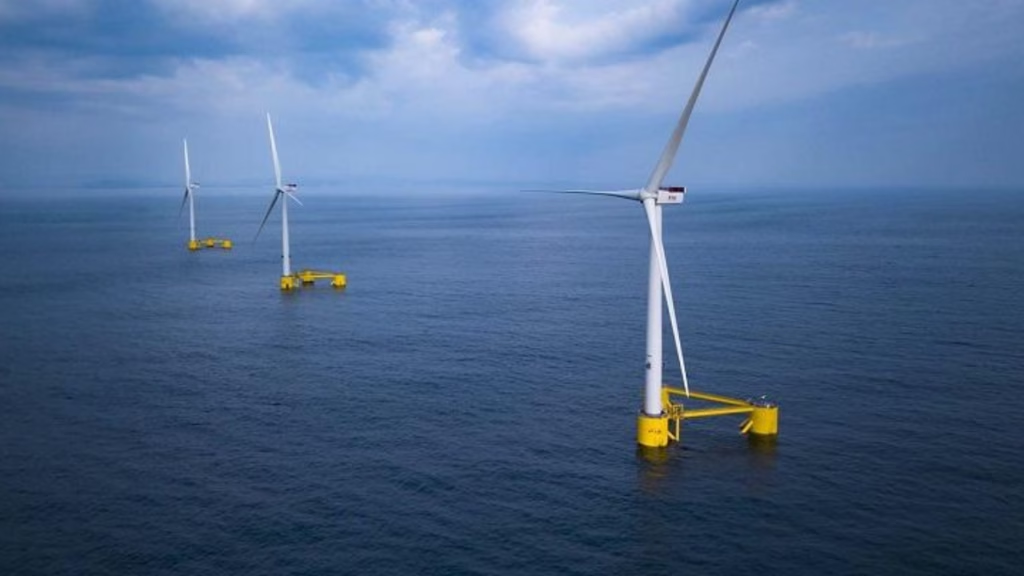
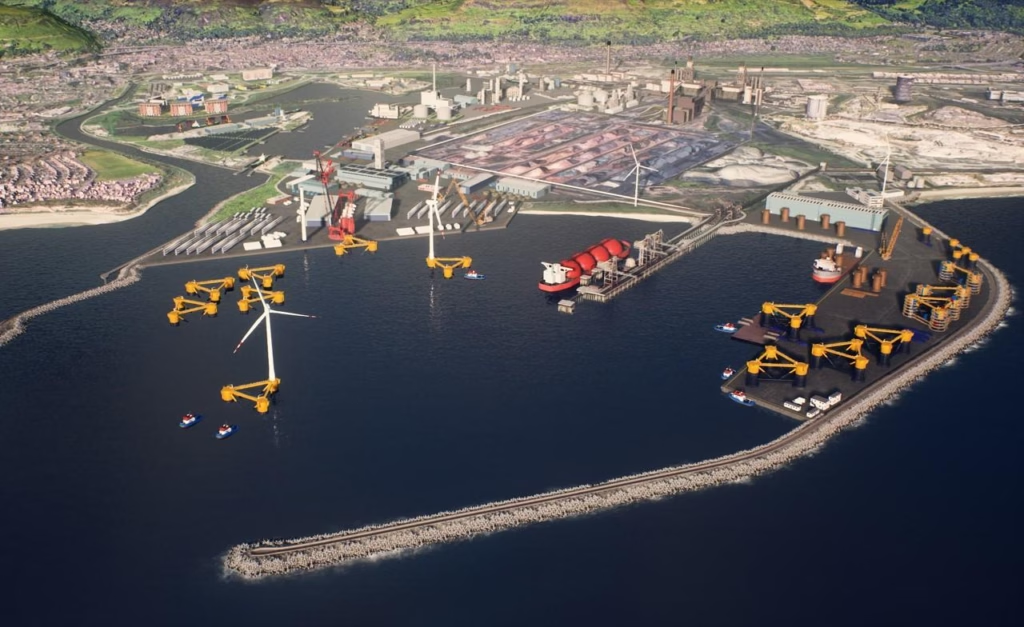
That process requires extensive laydown space, heavy-load quays, controlled assembly zones, deep-water marine access, lifting capacity, storage areas and reliable transport links. A port designed mainly for conventional cargo may require major redevelopment before it can support floating wind at commercial scale.
Associated British Ports says the Future Port Talbot programme is intended to transform the port into a major hub for floating offshore wind and green energy development. ABP describes the site as a central location for manufacturing, assembly and integration of floating offshore wind projects in the Celtic Sea.
What the £64 Million Funding Supports
The UK Competition and Markets Authority’s Subsidy Advice Unit describes the grant as support for developmental expenditure, including design, environmental assessment and consenting activities. The aim is to progress Future Port Talbot to a consent-ready position capable of supporting future floating offshore wind deployment in the Celtic Sea.
This matters because early-stage port development is often where offshore wind programmes lose momentum. Developers can secure seabed rights, turbine technology can advance, and grid planning can move forward, but commercial deployment stalls if there are no suitable ports for integration and tow-out.
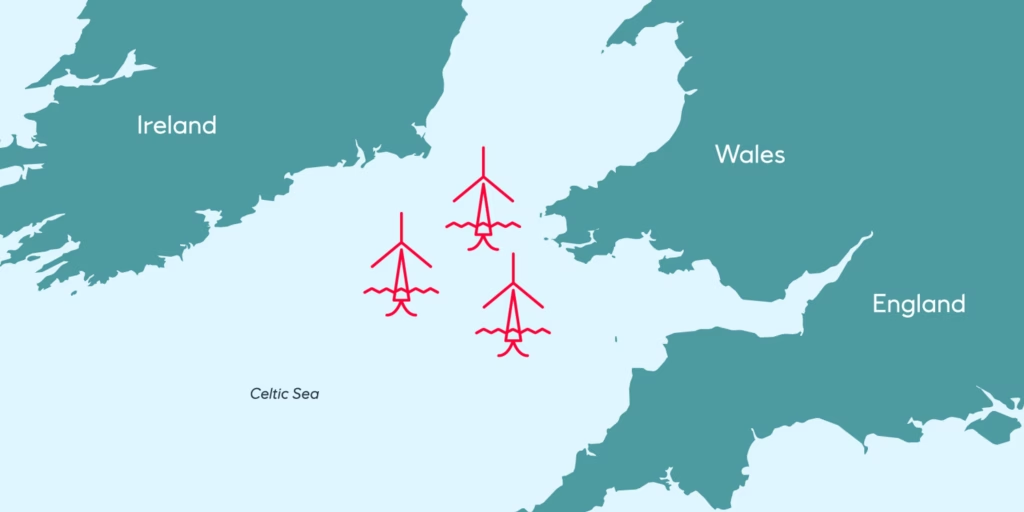
The Crown Estate’s Offshore Wind Leasing Round 5 is focused on the Celtic Sea and seeks to establish a new floating wind sector off South Wales and South West England, with up to 4.5 GW of new renewable energy capacity. The UK Government has also stated that the Port Talbot development could help unlock at least 4.5 GW of floating offshore wind projects in the Celtic Sea and support up to 5,000 jobs.
Why Port Talbot Is Strategically Placed
Port Talbot has a strong industrial base and direct relevance to the Celtic Sea opportunity. Floating wind projects need coastal industrial land, marine access and a workforce familiar with heavy engineering. South Wales already has experience in steel, fabrication, port operations and energy-related industry, which gives the region a practical starting point.
The economic value will depend on how much of the supply chain is retained locally. If the port only becomes a transit location, the regional benefit will be limited. If fabrication, assembly, electrical integration, inspection, marine operations and maintenance activities are anchored around the site, the project could support a stronger industrial transition for Port Talbot.
Key Engineering Requirements for Future Port Talbot
The engineering scope will be demanding. Heavy-load pavements and quay structures must be designed for large floating wind components and specialist transporters. Marine works may involve dredging, berth upgrades and navigation improvements. Assembly zones must allow safe movement of blades, towers, nacelles and floating substructures.
Logistics planning will need to account for weather downtime, tidal windows, tow-out sequencing, vessel availability and interface management between fabricators, port operators and offshore developers. Electrical infrastructure, drainage, lighting, emergency access and environmental controls will also need to support high-intensity industrial activity.
A floating offshore wind port supports clean energy, but the port works themselves still require careful environmental review. Marine construction can affect sediment movement, habitats, fisheries, water quality, navigation and coastal processes. The project must show that the enabling infrastructure is responsibly designed before large-scale capital works move ahead.
This explains why funding for design and consenting is so important. It allows the project to mature before full construction commitments are made, reducing uncertainty for government, investors, developers and local stakeholders.
Why This Matters for the UK Offshore Wind Supply Chain
The Port Talbot funding reflects a wider policy lesson: renewable energy targets require physical supply chains. Offshore wind needs ports, grid connections, vessels, fabrication capacity, skilled labour, maintenance bases and clear consenting routes. When one of these elements is missing, capacity targets become difficult to deliver.
Future Port Talbot could become a major node in the UK’s floating offshore wind economy if the project reaches construction and secures long-term industry demand. Its success will depend on engineering readiness, local supply-chain depth, environmental approval and alignment with Celtic Sea project timelines
News Credit
UK Government – £64 million for Port Talbot offshore wind hub
https://www.gov.uk/government/news/64-million-for-port-talbot-offshore-wind-hub-in-the-celtic-sea
Competition and Markets Authority – Future Port Talbot Subsidy Referral
https://www.gov.uk/cma-cases/referral-of-the-proposed-subsidy-to-associated-british-ports-by-the-department-for-energy-security-and-net-zero
Subsidy Advice Unit Final Report (PDF)
https://assets.publishing.service.gov.uk/media/6a0af113fcae986635db90b0/Future_Port_Talbot_Final_report.pdf
Associated British Ports – Future Port Talbot
(Official ABP project information.) The Crown Estate – Offshore Wind Leasing Round 5
(Official Celtic Sea floating wind programme.)