The connection at Quezon Avenue shows how cuttable reinforcement helps engineers manage the interface between a tunnel drive and a station wall.
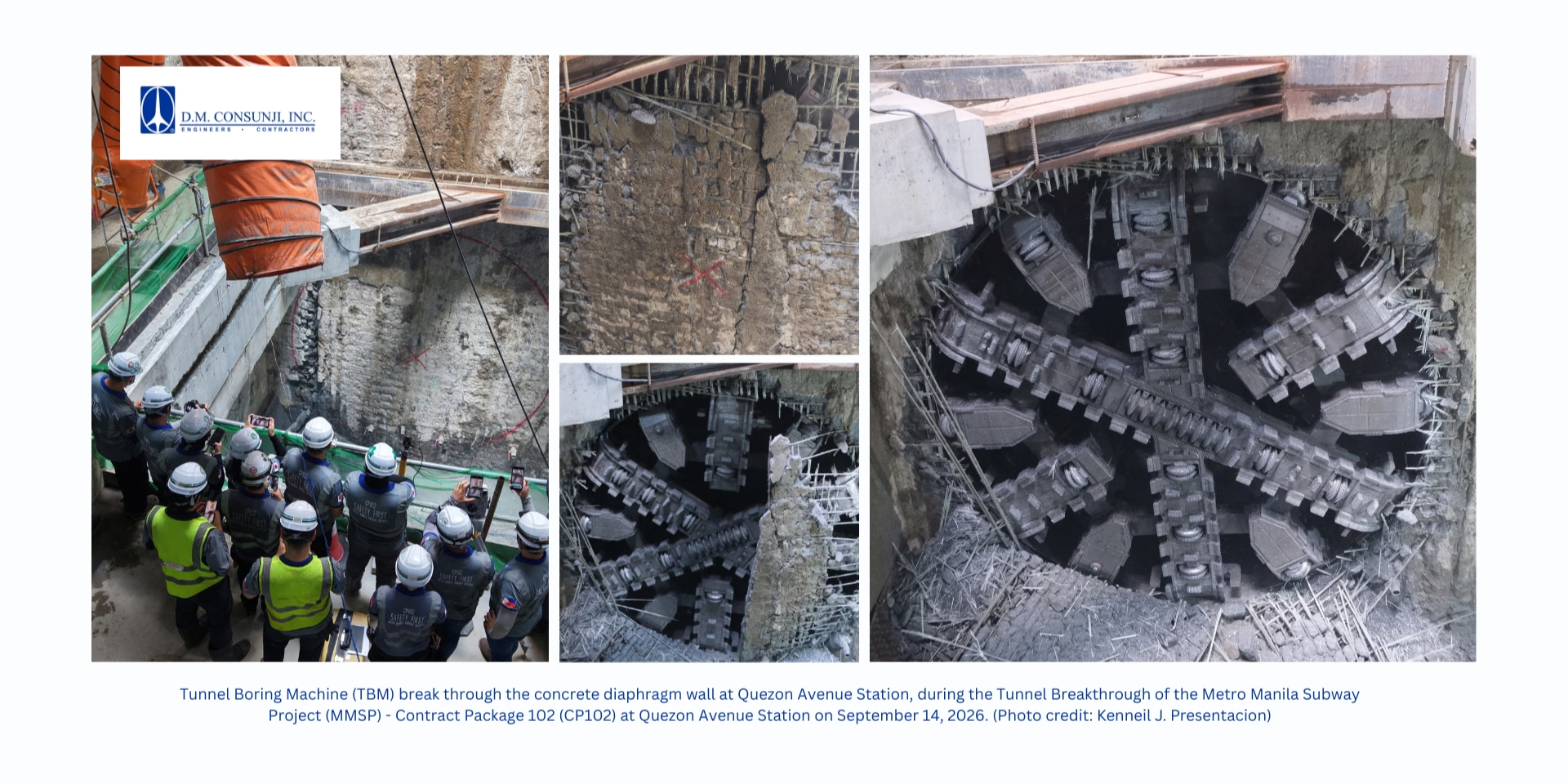
Driving a tunnel beneath a crowded city means negotiating more than ground conditions. A tunnel boring machine (TBM) must also pass through structures built to retain the surrounding earth. At Quezon Avenue Station, the Metro Manila Subway Project has completed one such connection: a southbound tunnel from North Avenue.
The breakthrough and the later inspection
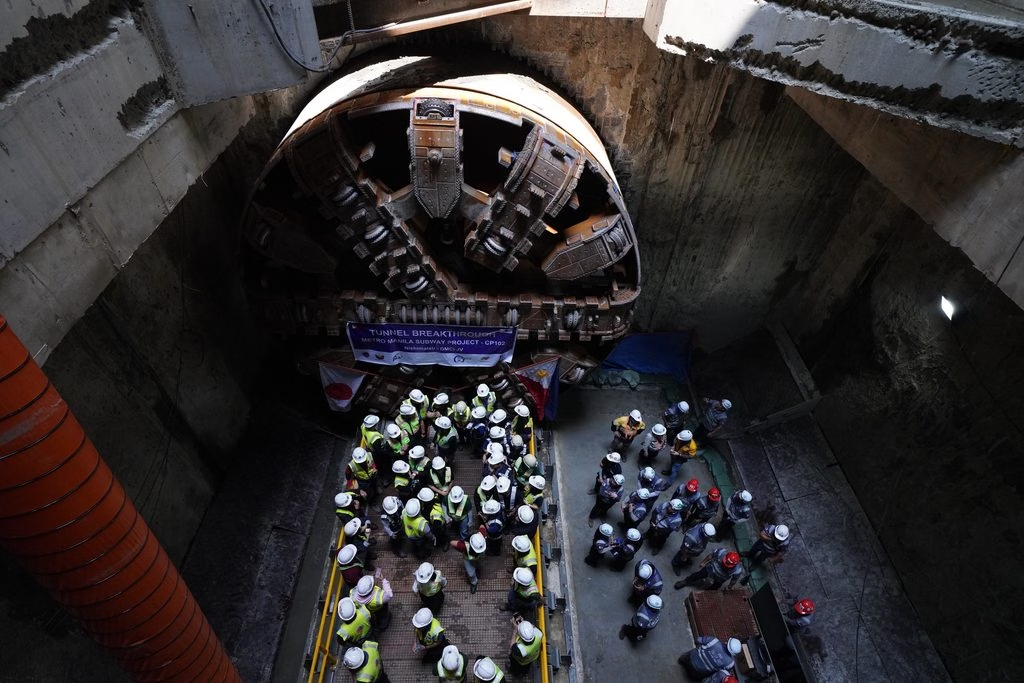
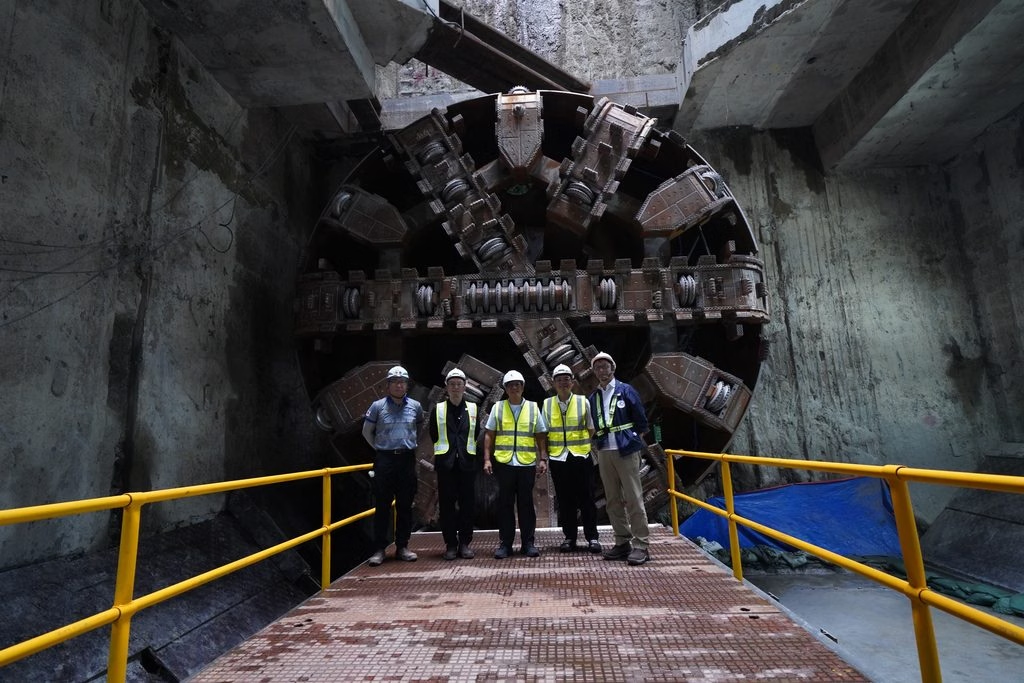
Contractor D.M. Consunji, Inc. (DMCI) reports that the breakthrough occurred on 14 September 2026, completing approximately 1.12 kilometres of tunnel. President Ferdinand Marcos Jr. inspected the site on 23 September. The Japan International Cooperation Agency (JICA) says the visit included the tunnel approximately 35 metres below ground and the TBM arrival shaft. The inspection followed the excavation milestone.
The works form part of Contract Package 102, delivered by the Nishimatsu–DMCI Joint Venture. DMCI describes approximately 3.1 kilometres of works covering Quezon Avenue and East Avenue stations and their connecting tunnels. The completed drive is one element of that package; it does not mark completion of the railway.
Designing the station wall for breakthrough
DMCI reports that the diaphragm wall penetrated at Quezon Avenue used fibreglass reinforcement in place of conventional steel reinforcement, with the aim of avoiding unnecessary cutterhead damage. This is consistent with the established soft eye approach: a deliberately cuttable zone at a planned tunnel opening.
A diaphragm wall is a deep concrete retaining wall used around an underground excavation. The breakthrough zone must be designed for its structural role before the machine arrives and for controlled removal as the cutterhead passes through. The contractor’s account does not provide the reinforcement layout, so it should not be read as evidence that the entire station wall used fibreglass bars.
Why cuttable reinforcement matters
Glass fibre reinforced polymer (GFRP), commonly used in soft eye zones, consists of glass fibres embedded in a polymer matrix. It provides reinforcement that a TBM can cut into fragments, allowing the material to be removed with the excavated spoil. The useful property here is its combination of structural capacity and cuttability.
GFRP therefore enables a reinforced penetration zone rather than an unreinforced opening awaiting the machine. It remains part of an engineered construction sequence. Bar properties, cage arrangement and connections must suit the loads and installation stages; cuttability alone does not establish the adequacy of a wall design.
The public Manila account identifies fibreglass reinforcement but does not specify its product grade, detailed design or measured cutter-wear results. It supports the stated purpose of the material choice, rather than a quantified reduction in damage or construction time.
The sequence remains project specific
Crossrail’s technical learning records describe GFRP replacing conventional steel within soft eye zones at portals, station boxes and shafts, with temporary steel used to help lift and place reinforcement cages. This distinction shows why reinforcement handling and the eventual cutting zone must be considered together.
Those records also show that station excavation and tunnel drives can follow different sequences. At Paddington, the original programme envisaged TBM passage before the station box was fully excavated and formed. Changes to the construction sequence led to revised interface arrangements. That case illustrates the importance of sequencing; it does not establish that Manila used the same design.
From civil works to passenger service
JICA describes the Metro Manila Subway as the Philippines’ first subway. Its September 2026 update sets out a planned line with 17 stations serving six Metro Manila cities and connections to LRT Lines 1 and 2 and MRT Line 3. These are intended network connections, not services opened by this breakthrough.
The wider delivery task extends beyond tunnels and stations. JICA’s 2022 loan documentation includes depot works, railway systems, rolling stock and consulting services among the financed components. Passenger operation depends on completing and integrating those elements and carrying out the necessary testing and commissioning.
Quezon Avenue demonstrates how decisions embedded in a station wall can enable a later tunnel connection. Reinforcement selection, cage installation and the construction sequence must work together. The next challenge is to carry that coordination through the remaining civil works and railway systems into passenger service.