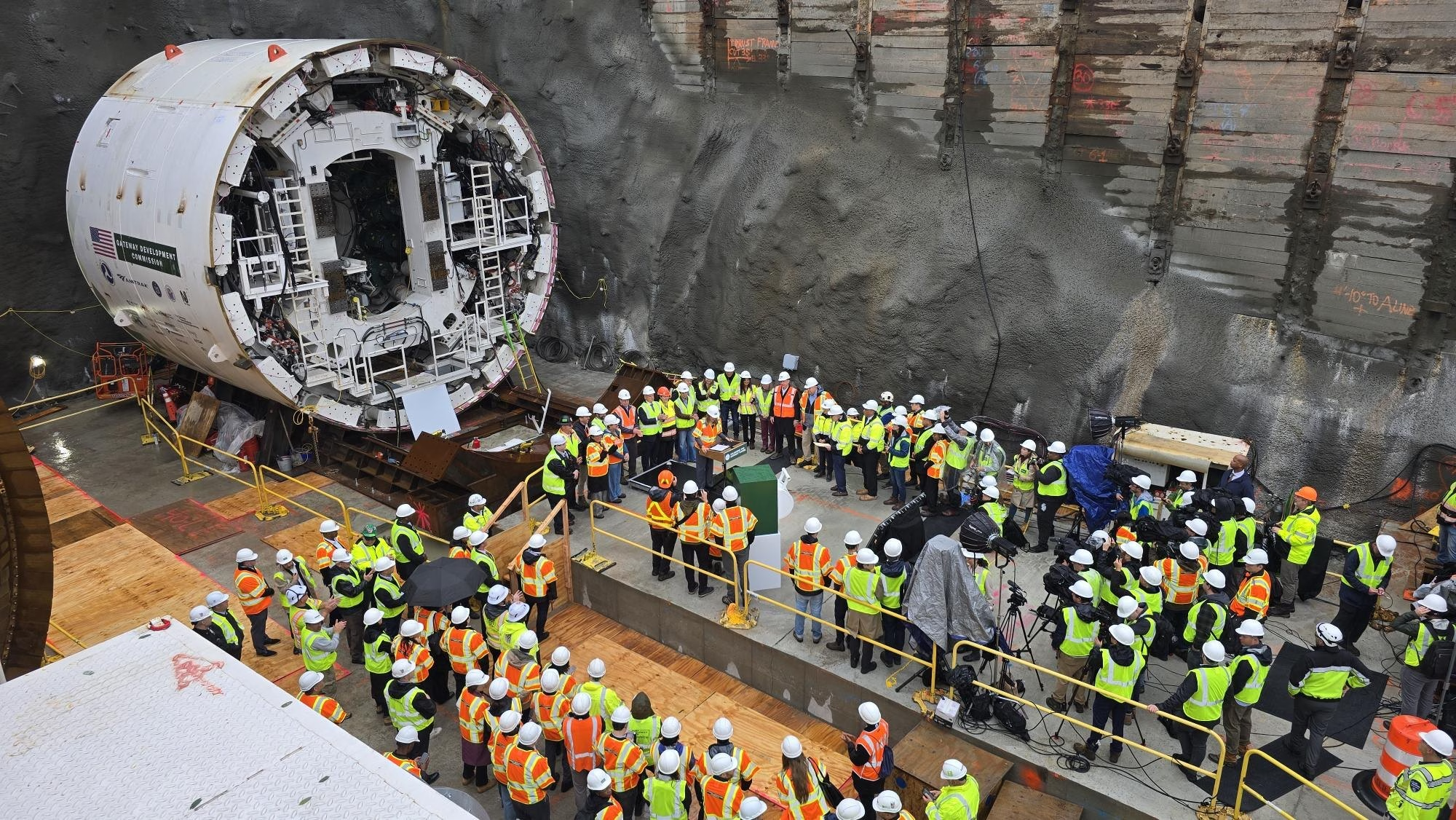
The first drive through New Jersey’s Palisades advances a project designed to keep trains running while a century-old crossing is renewed.
Officials marked the ceremonial launch on 28 September 2026. On 8 October, the Gateway Development Commission (GDC) confirmed that the first tunnel boring machine (TBM) had begun mining the northern tube beneath New Jersey’s Palisades. This landward drive forms the approach to the first new passenger rail tunnel beneath the Hudson River in more than a century.
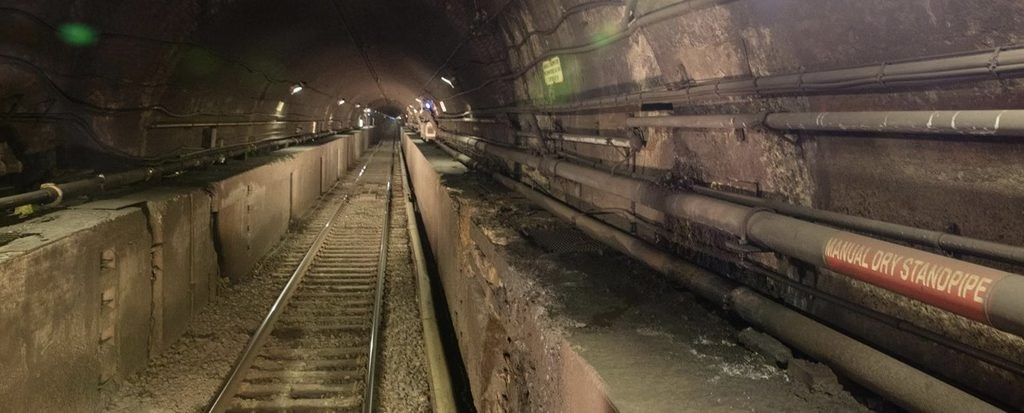
The existing North River Tunnel opened to passenger service in 1910 and carries Amtrak and NJ TRANSIT trains into New York Penn Station. Superstorm Sandy flooded it with seawater in 2012; residual chlorides continue damaging the tunnel and its electrical equipment. The Federal Transit Administration’s FY2025 project profile describes more than 200,000 daily passenger trips through the crossing, illustrating the consequences of a prolonged loss of service.
Table of contents
Why build the new tunnel first
The approximately US$16 billion Hudson Tunnel Project combines a new twin-tube crossing with rehabilitation of the existing North River Tunnel. It is one component of the wider Gateway Program. Once the new crossing is operating, trains can be diverted into it and the existing tunnel’s two tubes rehabilitated one at a time. Building the additional crossing creates the access needed for major renewal while maintaining passenger rail service.
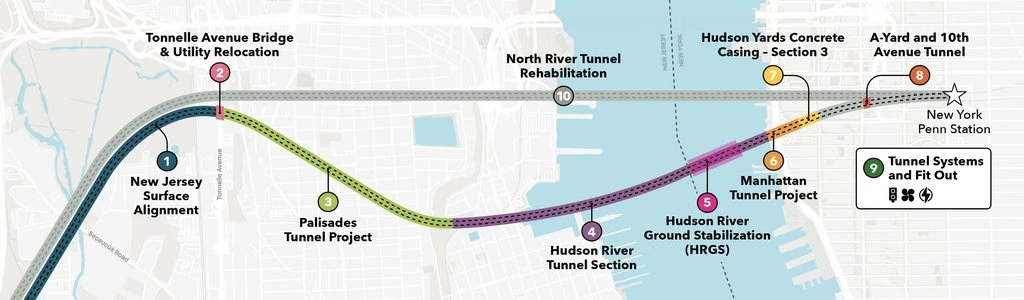
Through the Palisades
Two single-shield TBMs will excavate parallel tubes approximately 5,100 feet (1.55 kilometres) long, from the portal in North Bergen to the Hudson County Access Shaft near the Weehawken–Hoboken boundary. These machines are designed for the hard, dry rock of the Palisades; they will not excavate the section beneath the river.
Each cutterhead measures 28 feet 8 inches (8.74 metres) in diameter, while the trailing gantries extend roughly 500 feet (152 metres). The cutterhead diameter describes the excavation size. GDC gives a finished internal tunnel diameter of 25 feet 2 inches (7.67 metres).
GDC forecasts roughly 30 feet (9.1 metres) of tunnel per day, including scheduled maintenance pauses, and approximately one year to complete the Palisades drives. These are published production and duration forecasts, rather than demonstrated averages from completed drives.
Excavation and lining
Disc cutters on the rotating cutterhead press against the rock face and fracture it into chips. Buckets collect the excavated material and feed it onto conveyors for removal. Behind the face, an erector assembles the permanent lining rings from precast concrete segments.
In conventional single-shield operation, excavation pauses while a lining ring is assembled. Once the ring is complete, hydraulic thrust jacks push against it to begin the next advance. Excavation and lining installation therefore form successive stages of the production cycle.
At the Hudson County Access Shaft, the hard-rock machines will be removed. A second pair, designed for the mixed ground conditions beneath the Hudson, will build the river section. The Palisades package also includes six cross passages between the parallel tubes, as described by GDC and contractor Webuild.
Funding and delivery
Construction paused on 6 February 2026 following an earlier suspension of federal funding. On 24 February, GDC announced that work was resuming that week, using approximately US$235 million received from the federal government earlier that month. On 18 September, New Jersey Governor Mikie Sherrill welcomed the administration’s withdrawal of its latest Gateway funding appeal.
The start of mining demonstrates progress despite that disruption. It does not establish that every financial or delivery risk has been resolved. Consistent funding remains important to coordinating the project’s separate construction packages.
What completion delivers
The published schedule targets opening the new crossing in 2035 and completing rehabilitation of the existing tunnel in 2038. The completed project would provide two new tracks alongside two rehabilitated tracks, improving redundancy and operational flexibility for Amtrak and NJ TRANSIT.
Four tracks beneath the Hudson will not automatically double train service. The federal environmental review identifies other capacity constraints between Newark and New York, including at Penn Station, that must be addressed before additional peak-period service can be provided.
An Amtrak Office of Inspector General report dated 15 December 2025 recommended clearer responsibilities, better visibility of project risks and stronger internal coordination. It also recognised Amtrak’s early planning for testing and commissioning. Communications, signalling, ventilation and other operational systems must be tested before the new infrastructure can enter passenger service.
The engineering lesson
Gateway illustrates how construction sequencing can create the access needed to renew an indispensable asset. The additional crossing provides an alternative route before the existing tubes are withdrawn for major rehabilitation. The next test is to coordinate tunnelling, railway systems and renewal into reliable passenger service while the existing crossing continues carrying its daily load.
PROJECT WATCH |
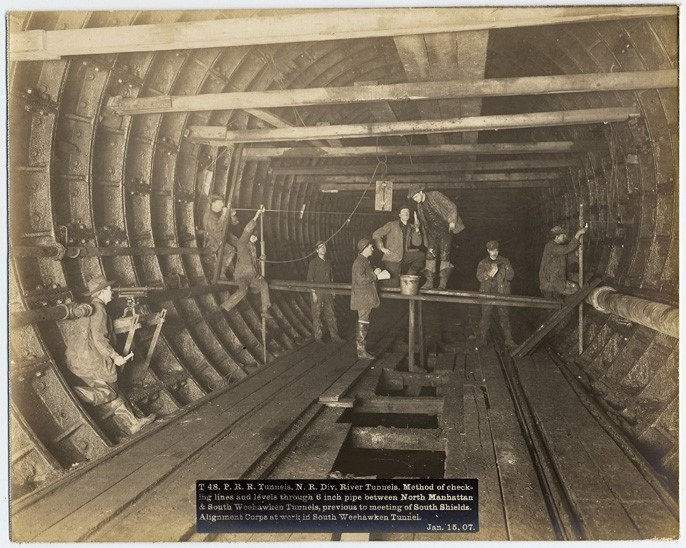
Construction of the original North River Tunnel, which entered passenger service in 1910. Archive image via Gateway Development Commission.
At a glance
| Item | Project information |
| Project | Hudson Tunnel Project, part of the Gateway Program |
| Estimated cost | Approximately US$16 billion |
| Works | New twin-tube crossing and rehabilitation of the North River Tunnel |
| Palisades drives | Two tubes, each approximately 5,100 ft (1.55 km) long |
| TBM cutterhead | 28 ft 8 in (8.74 m) in diameter |
| Forecast production | Approximately 30 ft (9.1 m) per day, including scheduled maintenance pauses |
| Milestones | Ceremonial launch 28 September 2026; mining confirmed 8 October 2026 |
| Schedule targets | New crossing opens in 2035; rehabilitation completed in 2038 |
| Passenger demand | More than 200,000 daily passenger trips, as cited in FTA’s FY2025 profile |