Why Britain’s High-Speed Rail Project Is Now a Governance Case Study
HS2 remains one of the United Kingdom’s most technically demanding infrastructure programmes. It combines deep tunnelling, viaduct construction, major station works, utility diversions, environmental management, railway systems integration and long-term public funding. On site, the engineering progress is visible. However, the latest programme reset has changed the way HS2 is being judged. The question is no longer only whether the railway can be built, but whether cost, scope, schedule and delivery governance can be brought under credible control.
Table of contents
- Why Britain’s High-Speed Rail Project Is Now a Governance Case Study
- Major Engineering Progress on the Ground
- The 2026 Reset: Cost and Schedule Reframed
- Why HS2 Is Also a Governance Challenge
- The Next Risk: From Civil Works to Railway Systems
- Environmental and Community Delivery Still Matter
- What HS2 Means for UK Infrastructure Delivery
Major Engineering Progress on the Ground
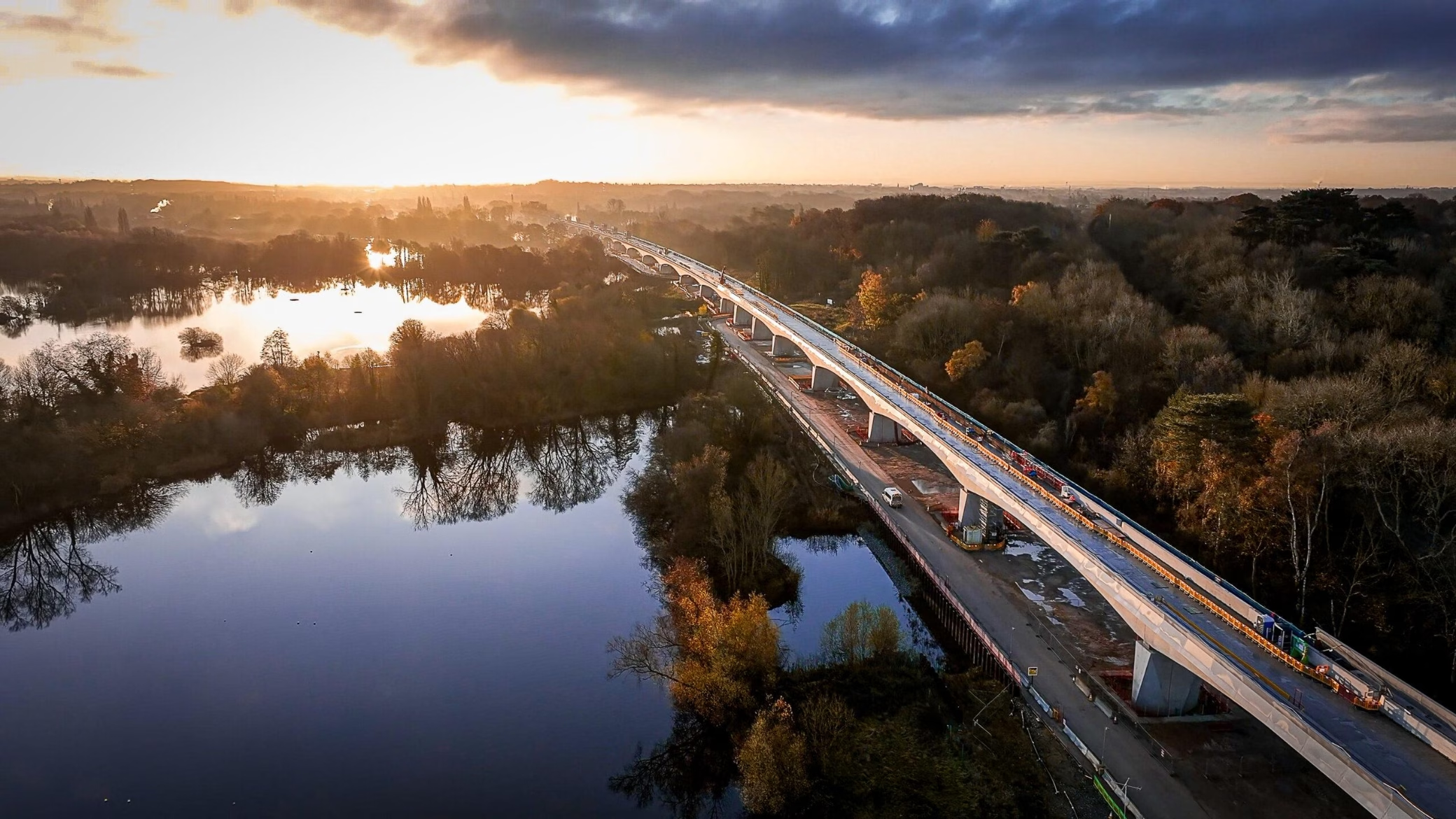
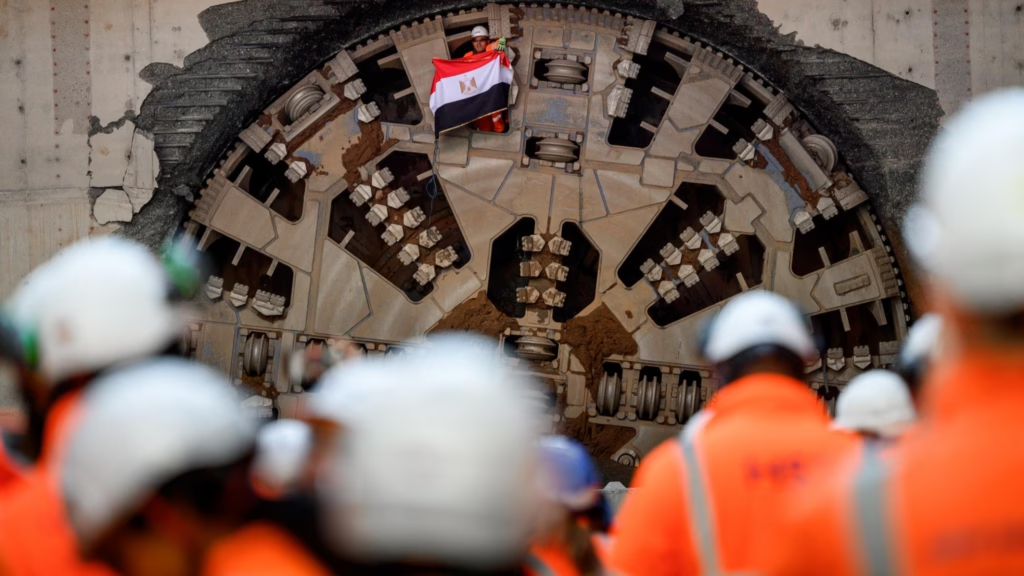
The physical progress on HS2 is significant. HS2 Ltd reported that the Colne Valley Viaduct, Britain’s longest railway bridge, has been completed, and that excavation of all 23 miles of deep-bore tunnels on the opening section between Old Oak Common and Birmingham Curzon Street has been completed.
This is a major engineering achievement. HS2’s tunnelling programme has involved large tunnel boring machines, precast concrete segmental linings, ground movement control, spoil handling, cross passages, ventilation shafts and complex interfaces with future railway systems. In urban and environmentally sensitive areas, tunnelling is not simply excavation; it is a controlled operation where settlement, vibration, logistics and public disruption must be carefully managed.
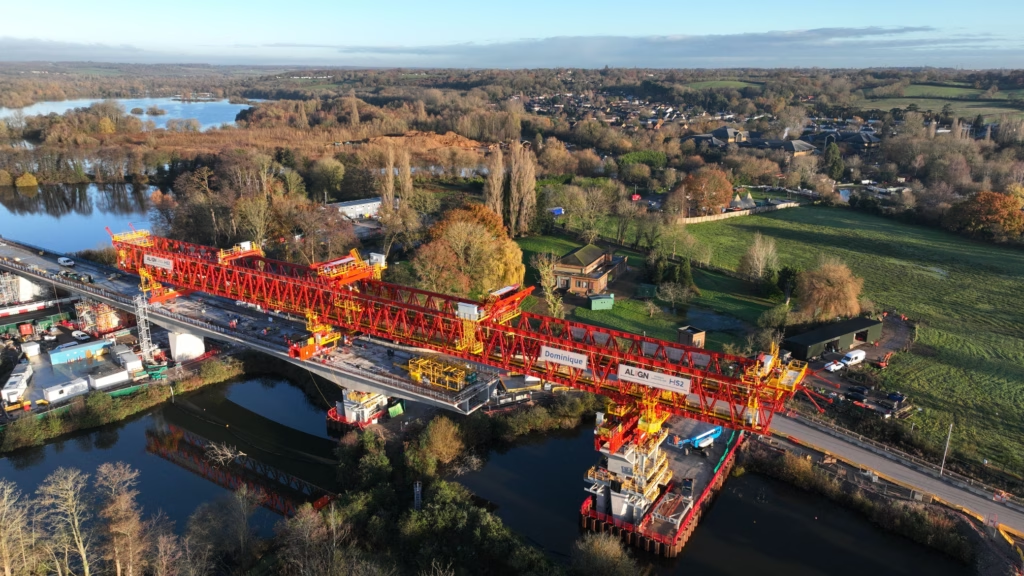
The Colne Valley Viaduct also represents the scale of above-ground civil works required for the route. Together, the tunnels and viaducts show that HS2 is not a paper project. Large parts of the railway are physically taking shape.
The 2026 Reset: Cost and Schedule Reframed
Despite this progress, the UK Government’s 2026 reset places HS2 in a more difficult public and commercial context. The Department for Transport has stated that the expected cost of delivering HS2 is now between £87.7 billion and £102.7 billion. The first services from Old Oak Common to Birmingham Curzon Street are now expected between May 2036 and October 2039.
These figures are important because they reframe the problem. HS2 is not only facing construction delay; it is facing a baseline credibility issue. The Government linked much of the increase to missed scope, underestimation, inefficient delivery and inflation. For construction professionals, this is a familiar megaproject pattern: early optimism creates weak baselines, and weak baselines later become cost escalation, schedule drift and loss of confidence.
Why HS2 Is Also a Governance Challenge
HS2 shows that engineering performance and programme performance are not the same thing. A tunnel breakthrough or completed viaduct may be technically impressive, but the project is ultimately judged by whether the whole railway can enter safe, reliable and useful operation.
The National Audit Office has also highlighted that the reset is still a work in progress. It noted that the Department for Transport and HS2 Ltd are resetting the programme, with the process expected to complete in 2027, and that significant work remains around cost, schedule, commercial relationships, Euston plans and delivery capability.
This matters because major railway schemes depend on mature definition before peak construction. Ground risk, utility interfaces, station design, supply chain capacity, land acquisition, consent requirements and systems integration all need disciplined early control. When these areas are underestimated, the project can continue building while the commercial and delivery model becomes increasingly unstable.
The Next Risk: From Civil Works to Railway Systems
The next phase of HS2 may be just as challenging as the tunnelling already completed. Civil construction does not automatically create an operational railway. Track, traction power, signalling, communications, train control, depots, rolling stock interfaces, testing, commissioning, cybersecurity, safety certification and trial operations must all work as one integrated system.
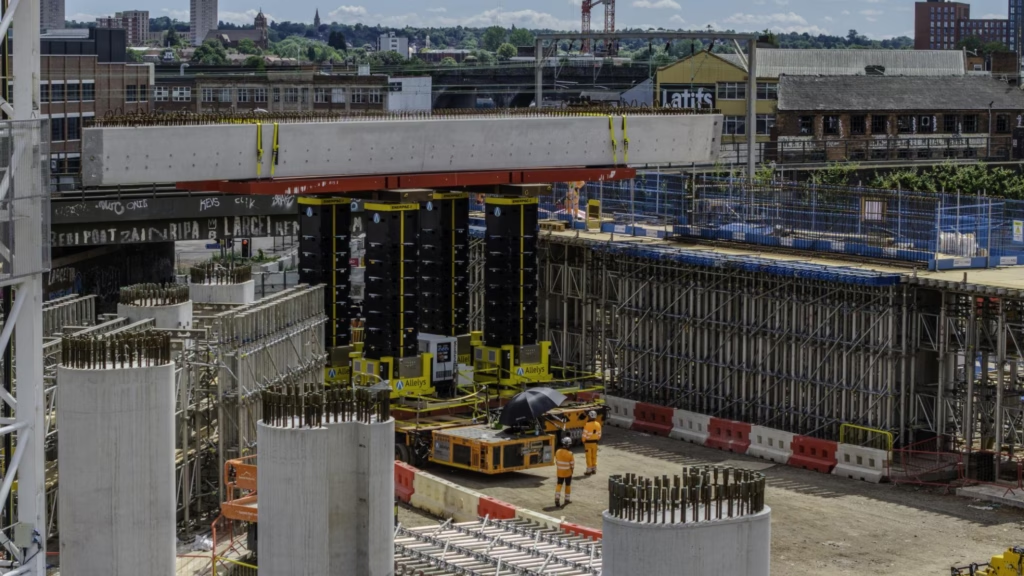
Many transport megaprojects struggle at this transition point. The risk moves from concrete and earthworks to configuration control, interface management and operational readiness. For HS2, this systems phase will be critical because the opening strategy depends on delivering a usable service between Old Oak Common and Birmingham before later extensions are completed.
Environmental and Community Delivery Still Matter
HS2 also remains a public-facing construction programme. Spoil movement, noise, local traffic, land reinstatement, ecology commitments and disruption to communities are not secondary issues. They affect public acceptance and political support. On a project crossing urban, rural and sensitive landscapes, construction logistics become part of the project’s social licence to operate.
What HS2 Means for UK Infrastructure Delivery
HS2 still has the potential to improve rail capacity, strengthen intercity connectivity and support modal shifts where rail can compete with road and air. However, those benefits depend on delivering a complete, reliable and operationally useful railway.
The broader lesson is clear: megaprojects are not controlled by engineering progress alone. They require realistic scope, disciplined cost estimating, mature design, strong commercial governance and honest schedule management. HS2 is now both a high-speed rail project and a national case study in how large infrastructure programmes must be reset when ambition, uncertainty and governance drift apart.