Why the Foundation Package Marks a Critical Start for Poland’s New Airport Programme ?
The appointment of Budimex for the CPK airport terminal piling works is more than an early construction contract. It marks the point where Poland’s long-planned national airport programme begins to move from design, procurement and enabling works into visible structural delivery.
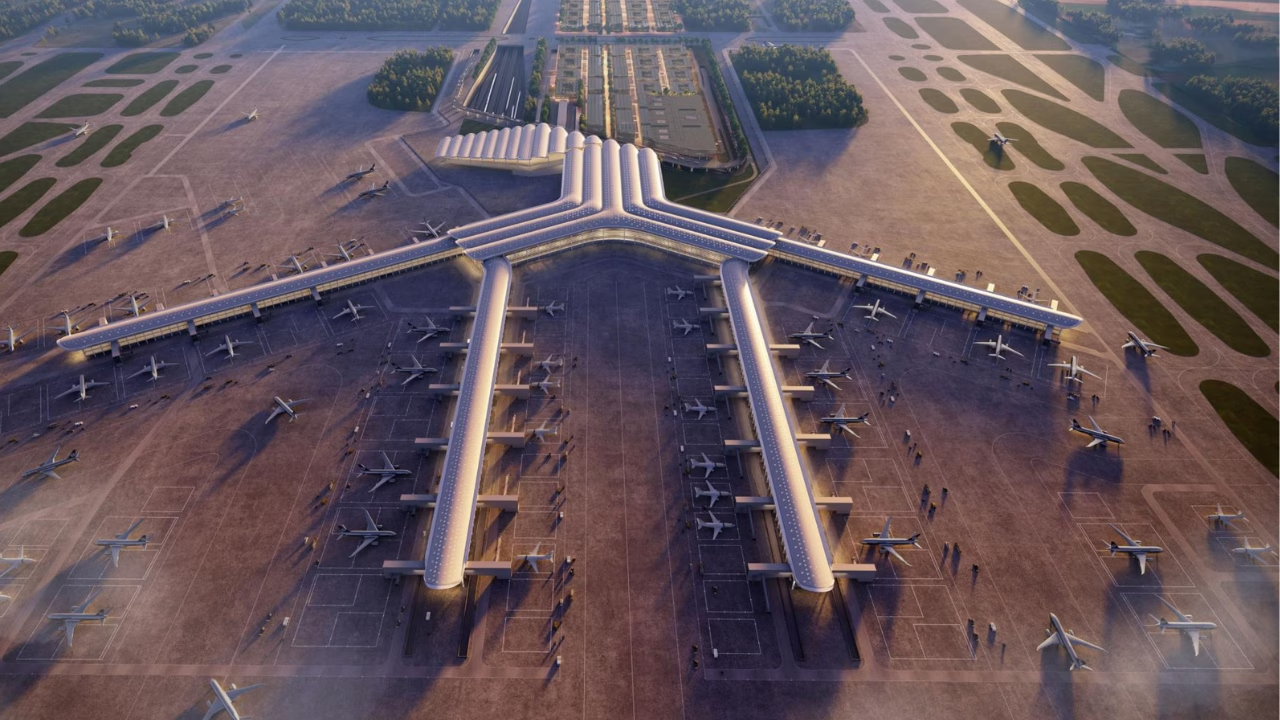
The project is part of the wider Port Polska Programme, developed by Centralny Port Komunikacyjny, which is designed to integrate air, rail and road transport into one national mobility system. The programme includes a new airport hub between Warsaw and Łódź, a high-speed rail network, and surrounding commercial and logistics development.
Table of contents
- Why the Foundation Package Marks a Critical Start for Poland’s New Airport Programme ?
- What Budimex Will Build
- Why Terminal Foundations Matter So Much
- Piling and Ground Improvement as a Combined Strategy
- Programme Importance for the CPK Airport
- A New Multimodal Airport Hub for Poland
- Why This Contract Is Symbolic
- Credits
What Budimex Will Build
Centralny Port Komunikacyjny has signed a contract with Budimex S.A. for the foundation works of the future passenger terminal. The contract is valued at nearly PLN 146 million, with the first construction works scheduled to begin in September 2026.
The scope is substantial. According to Port Polska, the foundation package will involve the installation of more than 8,000 piles and ground-improvement columns, using different technologies. These elements will range from 9 to 30 metres in length, with a total combined ground-reinforcement length exceeding 140 kilometres. The works will create the intermediate foundations that support the future passenger terminal structure.
Budimex’s own project statement confirms the same technical scope, including the use of multiple piling and column technologies, the 9–30 metre element range, and completion planned around the turn of 2027 and 2028.
Why Terminal Foundations Matter So Much
For a major airport terminal, foundation works are not just a routine enabling activity, but something that defines the physical base on which every later construction stage depends. A passenger terminal is a highly loaded and functionally complex building. It must support long-span roof structures, large column grids, baggage-handling systems, passenger circulation zones, plant rooms, retail areas, utilities, façade systems and transport interfaces. These systems are sensitive to settlement. Even small differential movements can affect floors, drainage gradients, escalators, façade alignment, baggage conveyors and mechanical installations.
This is why airport foundation design must address more than ultimate bearing capacity. It must also control long-term serviceability, settlement behaviour and stiffness variation across the terminal footprint.
Piling and Ground Improvement as a Combined Strategy
The use of both piles and ground-improvement columns suggests a foundation strategy designed to manage variable ground conditions and different load zones across the terminal area. Piles are generally used to transfer structural loads to deeper, more competent strata. Ground-improvement columns help increase stiffness and reduce settlement across wider areas.
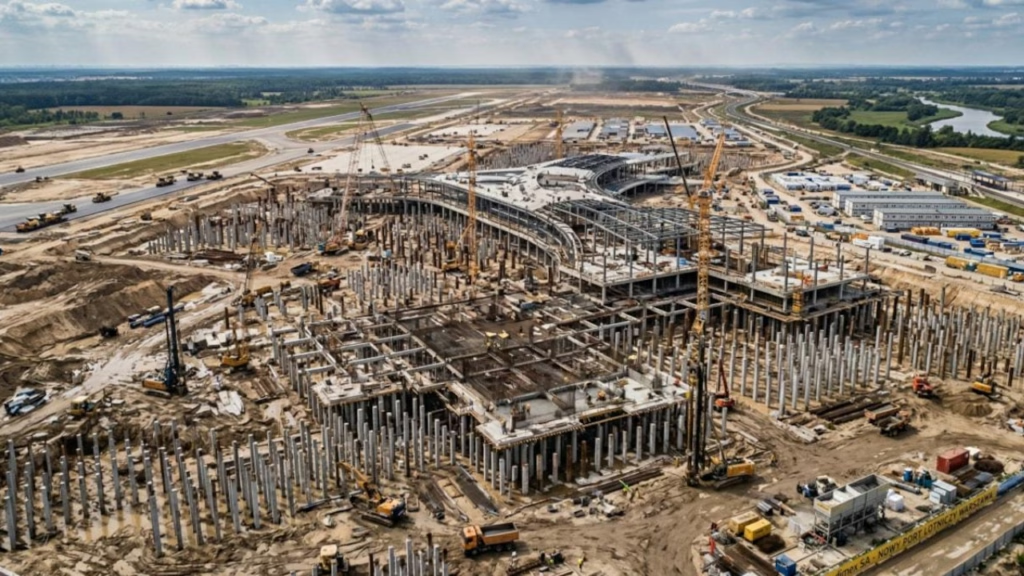
For a terminal of this size, the key challenge is not only installing thousands of elements. It is maintaining traceability and quality across the full foundation grid. Each pile or column needs a reliable record of location, depth, installation method, material data and acceptance testing. Production speed matters, but documentation and quality control matter just as much.
Programme Importance for the CPK Airport
The foundation package also has major schedule significance. Airport construction is highly sequential. Once the foundations are complete, the project can move into basement works, slabs, vertical structure, roof erection, façade installation, fit-out and systems integration.
A delay in piling can affect the entire terminal programme because later contractors depend on stable work fronts, access routes, crane positions and logistics zones. On the other hand, a well-executed foundation phase reduces uncertainty for the superstructure contractor and improves the reliability of downstream planning.
A New Multimodal Airport Hub for Poland
The new airport is planned as a multimodal hub rather than a standalone aviation asset. Port Polska states that the airport is designed to handle 34 to 44 million passengers on opening in 2032, depending on demand. The concept includes integration between the airport terminal, high-speed rail station and bus terminal under a one-roof arrangement.
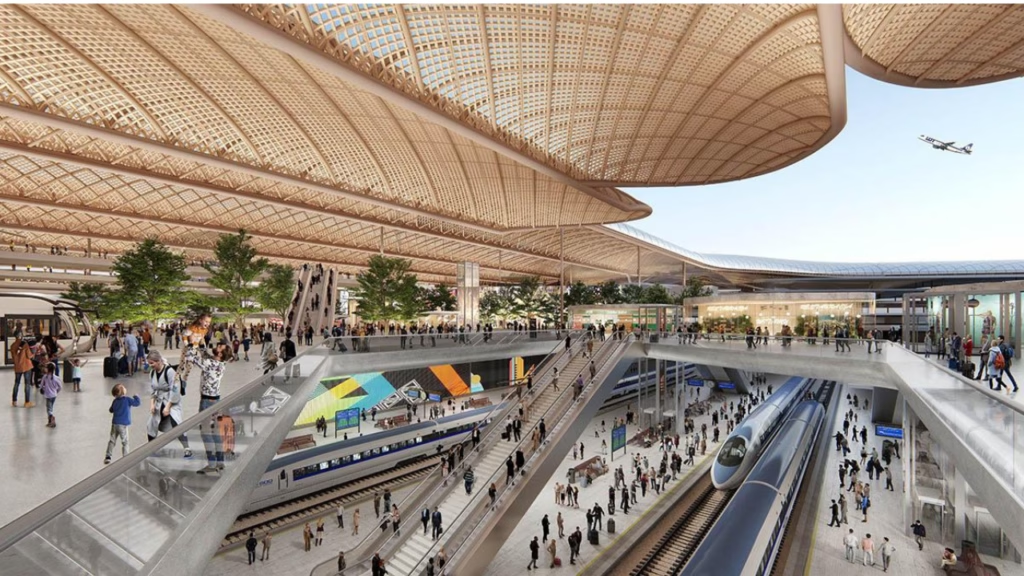
Credit: © Foster + Partners & Buro Happold / Centralny Port Komunikacyjny (CPK)
This integrated design makes the foundation package even more important. The terminal will not only process air passengers; it must also support intermodal transfer, baggage logistics, rail connectivity, utilities and future expansion.
Why This Contract Is Symbolic
Budimex’s appointment is symbolic because it turns CPK from a planned infrastructure vision into a physically grounded construction programme. The broader Port Polska investment programme is estimated at PLN 131.7 billion through 2032, including major allocations for airport works and high-speed rail infrastructure.
The piling package may be small compared with the total programme value, but technically it is one of the most important early steps. It fixes the terminal’s structural base, validates design assumptions and opens the path for the next major construction packages.
If delivered well, the CPK foundation works will provide the stable platform needed for one of Europe’s most ambitious airport and transport hub programmes.
Credits
Port Polska – Contract signed for foundation works at Poland’s new airport passenger terminal
Budimex – Contract signed for the construction of the passenger terminal foundations
Port Polska – Winning bid selected for terminal foundation works
Port Polska – Handover of the construction site for preparatory works