The Fehmarnbelt Fixed Link is one of Europe’s most technically significant transport infrastructure projects. Designed to connect Rødbyhavn in Denmark with Puttgarden in Germany, the project will create a permanent undersea road and rail corridor beneath the Baltic Sea. Once operational, it will replace ferry-dependent movement across the Fehmarn Belt with a fixed transport link capable of reshaping passenger travel, freight logistics and regional connectivity across northern Europe.
Table of contents
Why the Fehmarnbelt Fixed Link Matters
The Fehmarnbelt tunnel is not just a record-breaking construction project. It is a strategic transport corridor designed to improve mobility between northern and central Europe. Today, travel across this route is still strongly influenced by ferry operations. The fixed link will remove that dependency and provide a continuous land-based connection for road vehicles and trains.
Immersed Tunnel Construction: How the Baltic Sea Tunnel Is Being Built
From an engineering perspective, the most important feature of the Fehmarnbelt Fixed Link is its construction method. Unlike a bored tunnel, which is excavated underground using tunnel boring machines, the Fehmarnbelt tunnel is being built as an immersed tunnel.
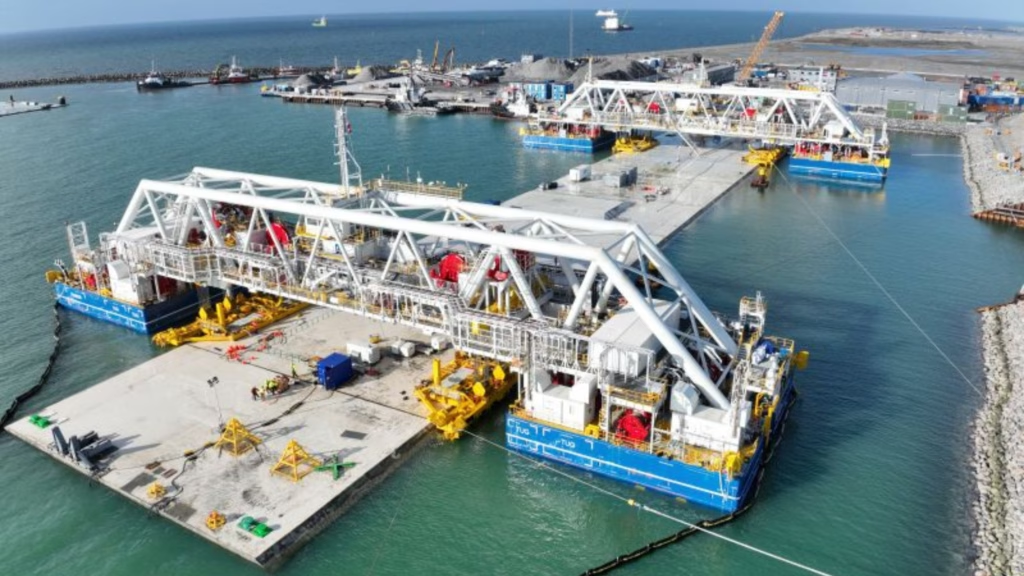
This means large reinforced concrete tunnel elements are manufactured in a controlled factory environment, floated to the offshore alignment, and then lowered into a pre-dredged trench on the seabed. Once positioned, the elements are connected underwater and progressively backfilled to form the permanent undersea structure.
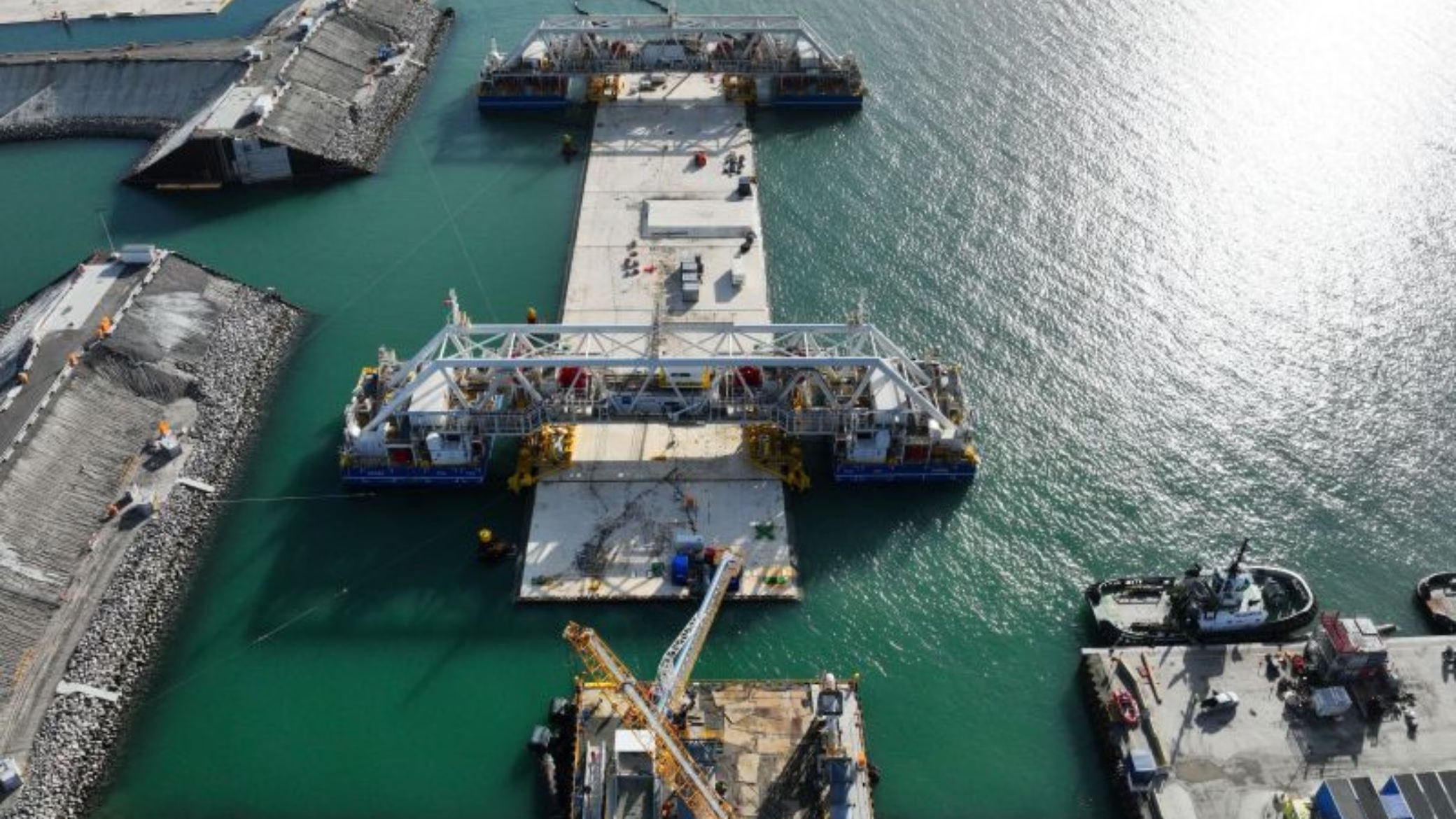
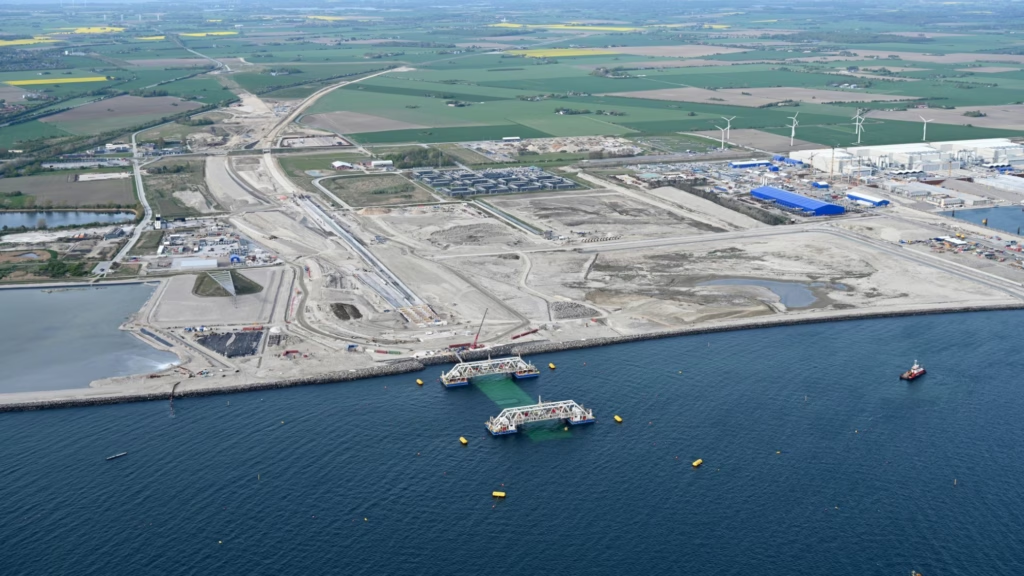
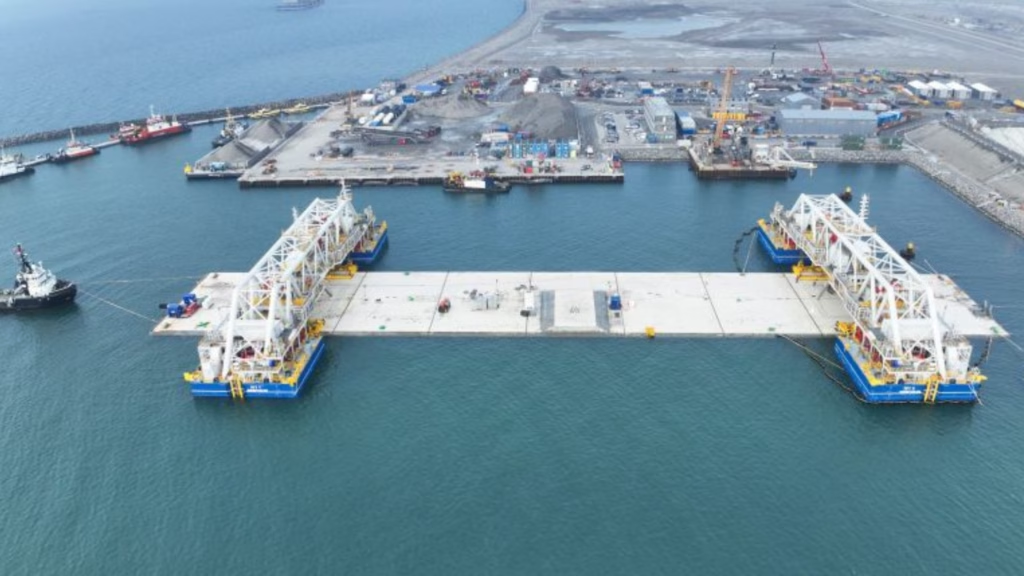
The tunnel elements are being produced at a purpose-built facility in Rødbyhavn, Denmark. Each element is cast, fitted with internal systems where possible, transported by tugboats and immersion equipment, and then placed underwater with high positional accuracy. In May 2026, Femern A/S confirmed that the first 217-metre tunnel element had been successfully placed on the seabed, marking a major transition from fabrication-led progress to permanent offshore installation.
The Scale of the World’s Longest Immersed Tunnel
The scale of the Fehmarnbelt prefabrication programme is exceptional. The tunnel is composed of 89 large concrete elements, each approximately 200 metres long. These elements are comparable in size to major marine structures and require careful handling at every stage of production, transport and installation.
Each tunnel segment must be floated, ballasted, submerged and aligned inside a trench roughly 40 metres below the sea surface. This process demands strict control of buoyancy, weather windows, seabed preparation, marine logistics and geodetic positioning. In immersed tunnel construction, even small deviations can create major downstream issues.
A misalignment at a tunnel joint can affect waterproofing, internal fit-out, long-term settlement performance and operational safety. For this reason, precision measurement, dedicated immersion vessels, controlled jointing and progressive backfilling are not secondary execution details. They are central to the structural reliability of the finished tunnel.
Durability Challenges in a Marine Tunnel Environment
Durability is one of the defining challenges of the Fehmarnbelt Fixed Link. A marine immersed tunnel must resist chloride exposure, hydrostatic pressure, cyclic traffic loading, joint movement and long-term seabed settlement. These conditions make concrete quality, waterproofing, gasket performance and inspection access critical throughout the asset’s service life.
In a tunnel of this type, durability cannot be treated as a one-time construction requirement. It becomes a permanent asset-management issue. The structure must remain serviceable for decades while operating under demanding marine and transport conditions. This is why quality control, monitoring systems and maintenance planning are embedded into the project from the beginning.
Integrated Road and Rail Tunnel Design
The final tunnel configuration will carry both motorway and rail traffic. It includes separate road and rail tubes, along with a dedicated service corridor for technical installations, inspection and emergency response. This separation improves operational safety by allowing road traffic, rail systems, ventilation, drainage, fire protection, power supply and communications to be managed through dedicated spaces.
For a long undersea transport asset, this approach is essential. The Fehmarnbelt tunnel is not simply a concrete structure below the seabed. It is a continuously monitored transport system, with civil engineering, mechanical systems, electrical infrastructure, signalling, communication networks and emergency functions integrated into a single operational asset.
German Rail Upgrades and Cross-Border Connectivity
The value of the Fehmarnbelt Fixed Link depends not only on the tunnel itself but also on the infrastructure connected to it. On the German side, the rail connection between Puttgarden and Lübeck is being upgraded and expanded to support the new cross-border corridor.
This includes double tracking, electrification, new structures, modern train protection systems and improved alignment capability. Without these supporting works, the tunnel could become a high-capacity link connected to constrained networks. The project therefore demonstrates an important lesson in megaproject planning: a major civil structure delivers its full value only when the surrounding transport system can absorb and distribute the movement it creates.
A New Benchmark for European Infrastructure
The Fehmarnbelt Fixed Link is more than the world’s longest immersed tunnel. It is a demonstration of how industrialised construction, marine engineering, transport planning and international governance must work together on a single programme.
Its success will be measured not only by the installation of the final tunnel element, but by the performance of the finished corridor. If delivered as planned, the Fehmarnbelt tunnel will provide a safer, faster and more resilient connection between Denmark, Germany and the wider European transport network.